The Lost Art of Hospitality

hospitality

People don’t seem to entertain much in their homes anymore. Maybe it’s their busy lives or a lack of confidence in their cooking abilities, or their self-consciousness about their homes. I like to have people over. Not all the time, of course. I love going out to eat where someone else has planned the menu, shopped for the ingredients, cooked and cleaned up. It’s generally worth every penny.

What makes a meal great for me is the company.

Home hospitality invites people into your private world, if you are so inclined. Some people find it too invasive and stressful.  For me, it is a way to connect with people and share values and customs. My children learn how to be hosts and hostesses.  They have to engage guests in conversation, make everyone feel welcome and comfortable, and help with the dishes. They put their devices down and make eye contact. And they learn to speak with adults who are not their parents, teachers or coaches.

It doesn’t matter if you buy prepared food and serve it on paper plates or cook a feast served on your china and crystal. After all, what’s the use of having all those beautiful things if they are only going to be used as decoration behind glass or stored in a closet? Using them lends beauty and a special aura to a meal. It creates memories for our children, who will in turn be happy to use them when we pass them along the family chain.

My mother was a master of entertaining. She made everyone feel warm and welcomed. She was so skilled at making her table look beautiful and her food delicious while also pleasing to the eye. She prided herself on “assembling” meals, a mixture of store-bought items which she would masterfully spruce up and home-made foods. I can only share this secret now that she is gone. I think she wouldn’t mind. Okay Mom?

The truth is, people are happy to be invited and not have to cook.  Unless you’re a world-class chef or the food is vile, no one will remember what they ate. And no one cares if you spent days slaving in the kitchen or merely a couple of hours. What they will remember is the feeling they had while in your home.

Priceless.


“Not Guilty”

notguilty

My husband is a very competent, caring person. While I was away on a recent trip to Israel, he managed to successfully get all four of our children off to camp. Although this is an impressive feat, let’s be real – yours truly made the fifty trips to Target and did the actual packing prior to my trip.

I called him on my last day in Israel as he was driving our son with special needs, the remaining child at home,  to sleep-away camp.

“Ben had a bad day yesterday,” he reported.

“I’m sorry,” I said.

“It’s not your fault,” he replied.

I appreciated his kindness. I felt sad that my son had a bad day and that my husband had to deal with the unpleasantness for several hours. Usually I am the one at home who has to deal with these episodes.  I am thankful he’s a hands-on dad. And that he didn’t try to make me feel bad for being away from home.

I hung up the phone and told my friends what had happened.

“I don’t feel guilty,” I explained, “I just feel badly for them.”

“What a novel concept,” one of them said, as if a light bulb had gone off over her head.

Feeling guilt, like so many other things in life, is a choice, and it is one that I don’t often choose to make.  I come by a guilt-free disposition naturally. My family doesn’t do the stereotypical “Jewish” guilt. In fact I hate when people act like guilt is part of our heritage.  Am I perfect? No. Do I make mistakes? Yes. I try to learn from them and do better the next time. Done. Let’s move on people, there is nothing to see here.

Women often feel self-centered or selfish when they do something for themselves or not with their families. I say nay-nay. In the blink of an eye my kids will be gone. I want to keep growing and enjoying life in ways that are sometimes independent of my family. I don’t want to get mired in feeling badly for what I have or have not done.

When I got home, my husband was quite proud of how he managed all of the household duties and challenges on top of his job. It reminded me of the time he came home from a business trip and my chest heaved with pride having fixed a broken toilet, as if it was a major engineering feat. We both praised each other even though I’m pretty sure each of us was secretly thinking, “Do you want a freakin’ medal?”

I returned from my trip energized. A whole week of being Susan, not someone’s wife or mother, was refreshing.

Selfish? I don’t think so. Self-preservation is more like it.

My Return to Israel

image

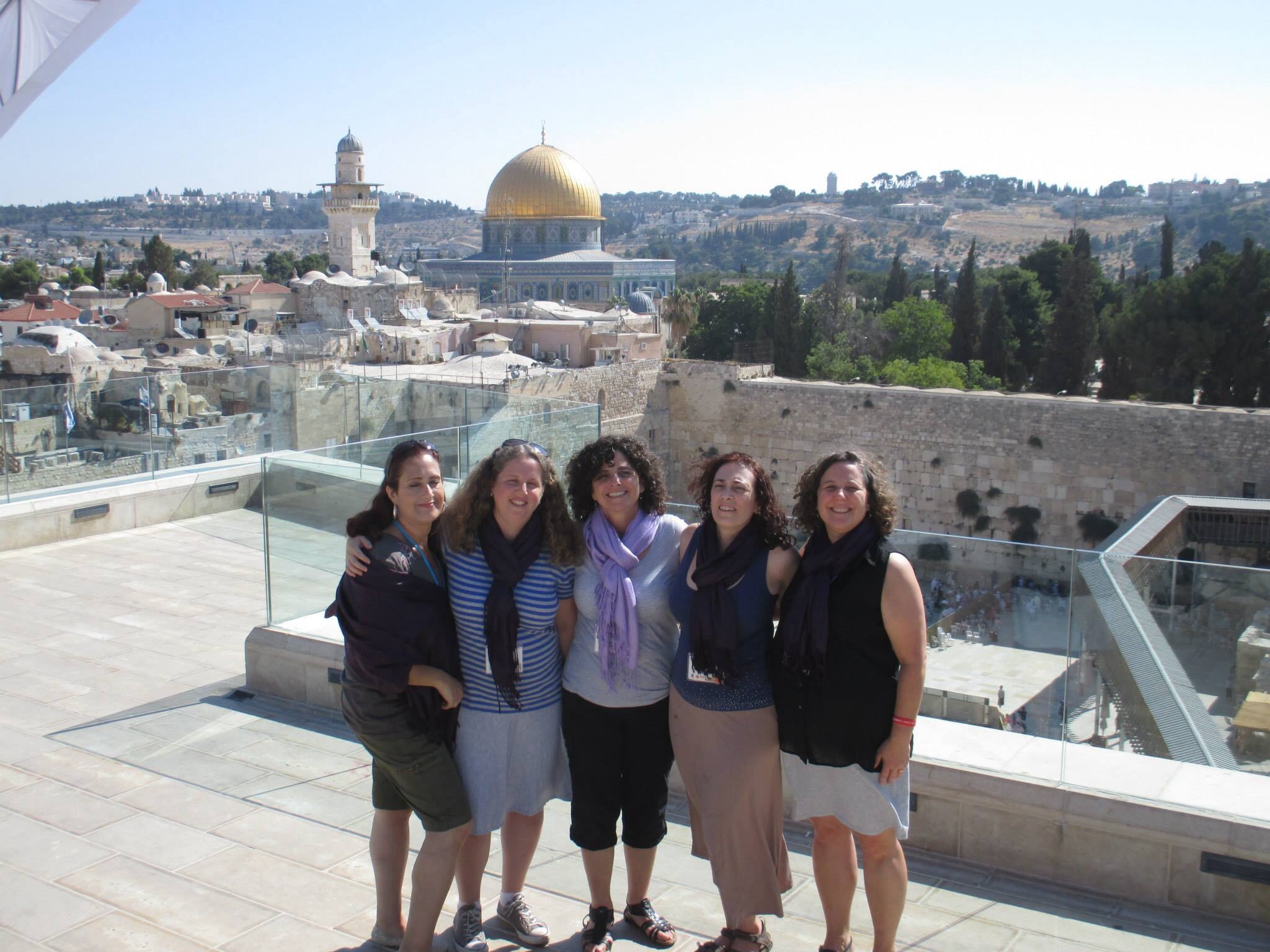
It’s been 17 years since my last trip to Israel when I came with my husband and new baby. My family has a strong connection to Israel, where my parents have owned an apartment in Jerusalem for 20 years. This time I am lucky to be with the Jewish Women’s Renaissance Project. This organization runs trips for women, mostly mothers, to expose them to Judaism and Israel in a deeper, more meaningful way.

I am very excited and happy to be back in Israel. My voice cracked with emotion when I called home to speak with my children to tell them about my trip so far. Where did that come from? I don’t really know, but it must be from the same place within me that was determined to come on this trip when others cancelled.

We feel very welcomed by the Israelis who tell us they are glad that we are here. Our contribution feels minimal but we are glad to shop and spend our money if that is how we can be helpful. Maybe our presence is our present? American friends tell us we are brave, but we don’t feel especially brave as we go about our business with our itinerary as planned. The most courageous thing I did this week was buy a piece of art without consulting with my husband. In my own way, I felt strong and decisive about that piece of art and it’s magical ability to help out the state of Israel.

I loved watching courting religious couples, meeting nervously for the first time in our hotel lobby. It reminds me that life goes on in this country, in spite of the incursion.

We are not oblivious to the situation surrounding us, although we have yet to experience air raid sirens or bomb shelters. We are reminded of the hardship and bravery of the Israeli soldiers when we meet Israeli mothers who ask us to say a prayer for their families. We share their worry and their pride.

I am just an ordinary Jewish woman who came to visit her homeland. It’s good to be home.

Desperate for Respite

images

I love the title of this essay and have been waiting for years to use it.  I always say this will be the title of my book, if I ever get around to writing one.

My disabled son will be going to sleep-away camp for two weeks soon, where he has gone for many years.  The camp specializes in caring for kids with chronic illnesses.

This Sunday, a week before he leaves, I am travelling to Israel on a women’s trip.  You must be desperate, you may think. Or crazy. Who goes on a trip to Israel in the middle of turmoil?  I am. This trip has been planned for months and I feel strongly that I need and want to go.

And yes, it gives me an extra week of respite from my child with special needs.

I don’t really feel as desperate these days as when my son was younger.  His health is stable as of late, so it’s his day-to-day care that becomes part of my daily grind.

Unlike typical people who graze when their stomachs tell them they’re hungry, I have to remind my son to “feed himself” 5-6 times a day with formula through his feeding tube.  He can do this independently. He is typical in that his face is generally glued to some sort of screen or device, so asking him to attend to this task progresses quickly from the nice, calm request of “Ben, please come feed yourself”  to “Ben, come feed yourself NOW!!”  It exponentially increases my shrew quotient.

Add the medication three times per day, and it’s a carefully orchestrated care plan that has become somewhat rote for me.  The trickiest time to medicate him is at 4:30 a.m.  Unfortunately, the sleep-to-wake autonomic process can cause my son to have one of his “crisis” episodes. The medication eases this transition so he can awaken and have a good day.  If I oversleep or set my alarm incorrectly, things go downhill very quickly.  My husband and I share much of our son’s care. I do the early morning medications and he does the last feeding before bedtime (when I’m usually asleep.) It works for us.

When we had our first child, I became aware of the constant competition between my husband and I about who was more tired.

“I’m so tired,” I’d say.

“No, I’m so tired,” he’d reply.

We agreed to acknowledge we are both exhausted and to just be kind to each other.  Being tired is a state of adulthood. Whining about it doesn’t make it any better.  Either get some sleep or stop talking about it.

So I don’t complain about the early morning medication.  As long as it keeps my son functioning and happy, it’s okay with me.  I appreciate the occasional break when I can allow my body to wake up at it’s natural time. Or an afternoon nap.

I will definitely welcome the separation. Even if my respite includes an occasional air raid siren or bomb shelter visit, it is a different stress and hardship from my daily life but one the Israelis know well.

Desperate for respite – from my home to the Middle East – it’s something everyone yearns for.

Preschool Cred

shutterstock_203431999Last month I went to pick up my ten-year-old daughter who was swimming with friends at a local pool and came across a preschool “graduation” party.  They looked so little to me – it was hard to believe they would be kindergartners in September.  The teacher recognized my daughter’s friends as former students at her school.  I confirmed that yes, they had gone to that preschool but my daughter had not.

“She did go to preschool though; she is a preschool graduate,” I quickly assured her. The absurdity of my response struck me, as if my daughter’s pedigree was in question.

Now I’m at another transitional education point – my eldest child will apply to college in the fall.  This time there are three adults (I know – it’s generous to call a 17-year-old an adult) involved in this decision, not two. We hope we have instilled in our son the ability to allow his life to unfold organically. I guess we’re about to find out if he will apply similar criteria to the college search that we did for the preschool search:

1) Is it a place where my child will be safe and happy?

2) Will he have a variety of learning opportunities, both academic and social?

Beyond that, I am not sweating the small stuff and fortunately neither is he, at least so far.  I am confident that he will get into one of the 3,500 colleges and universities in this country.  He is a great kid with a “resume” that reflects his interests, capabilities and growth. He has an idea of the kind of place he’d like to attend, and we support him wholeheartedly.

“Remember the crib,” my husband and I remind each other.

When we were shopping for a crib before our first child was born, we looked at many cribs in an enormous baby store until our eyes glazed over.  They were all nice and would all do the job. Do we buy the super expensive most beautiful crib or the functional, practical one?  We settled on the latter.  We realized once we got it home that we didn’t remember what any of those other cribs looked like.  What made our crib adorable was the baby in it.

We apply the crib theory to most decisions in our lives: don’t agonize, go with your gut feeling, and trust your inner voice.  We’ve found you don’t need to treat every decision as if it’s a high-stakes, win-lose situation.  Generally, things turn out the way they are supposed to.

My children are all preschool graduates, from a few different “schools.”  They don’t remember their preschool years, but I do.  As long as they were in a place where they were safe and happy, that was fine with me.  The fanciest, most prestigious, most expensive schools were not the criteria we used to pick preschools.  Location and a good vibe was what we were looking for.

“I thought you sent me to school to learn,” I told my mother when I sent my first child to preschool, “but it’s the best child-care ever!”

It was an epiphany for me. I was not the mother weeping when her two-year-old went off to class for three hours, twice a week. I was the one skipping happily out of the building to savor a few hours of freedom.

College will be a different experience, but maybe not so different.  Yes, he will study and learn. And he will put into practice the lessons he learned in preschool like how to use his words, how to share, and how to keep his hands to himself (hopefully.)  He will start out in a dorm with people looking out for him.  Something tells me I won’t be skipping away when we drop him off.  What a difference a few years makes.

I try to keep it all in perspective – a happy and independent adult is the goal, however he gets there.


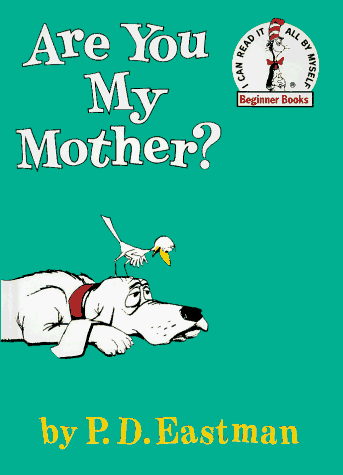
Are You My Mother?

Are You My Mother?


Areyoumymother

In my grief, my mind plays tricks on me. Whenever I’m out walking the dog and I notice a bird resting on a mailbox, I think that it’s looking at me.

“Mom,” I ask?

I like that fleeting moment of thinking my mother is checking on me, before the bird flies off. Do I actually believe that the bird is my mother? Not really. But I do believe her soul is floating out there somewhere, briefly inhabiting things that brought her joy and remind me of her.

Like the flowers I’ve planted outside of my kitchen window.  With a large family, I spend what sometimes feels like an eternity washing dishes in front of that window. Those flowers bring a bright spot to the monotony of the chore.

Recently I was at our neighborhood pool and I thought someone was speaking to me when they said to a person near me, “There’s your mother walking into the parking lot.”

“Really?” I thought.  My head popped up, looking and hoping with all of my heart that I would see my Mom walk into the pool.

Or the time when I had a meeting at my house and was putting out cans of Diet Coke. On the side of one of the cans, it said “MOM.”

Apparently it’s a new promotion of Coke and there were labels on other cans, such as Dad and BFF.  But I first noticed the one that said “Mom.” Could it be a sign? My mother always chided my sister about her Diet Coke consumption – she worried about the chemicals. Since I lived near my mother and therefore did not stay in her home as my sister did when she came to visit from out of town, she was unaware of my Diet Pepsi habit. My sister bore the brunt of that motherly concern. Should I not serve Diet Coke?  In my opinion, it is inferior to Diet Pepsi. Mom, what are you trying to tell me? Crazy, I know, but it made me laugh.

I often think I see her in the grocery store where we both shopped. It’s weird, the times and places that make you long for a person.

My father still lives in the home he and my mother made.  It continues to feel like her house.  Going there makes me feel close to her and very sad at the same time, as if she should be walking in the door any minute.  I think it’s both a source of comfort and sadness for my Dad.  How long will he keep the house?  Time will tell.

So I keep looking for my mother all around me…in the eyes of strangers, the beauty of nature, the hugs of friends and family, and in my children.  Mostly I guess she is within me.

Maybe someday I’ll stop looking so hard.

The “Joy” of Air Travel

shutterstock_197512382

We recently went on a family trip. It’s easier now that our children are older.  All they need is their screens and some sugar and they are good.  We bring our 15-year-old’s wheelchair, that he uses occasionally, to make it easier getting through the airport.  Adding to the stress of travel is the anticipatory stress of going through security because of my son’s feeding-tube supplies and medications.

On the first leg of our trip, I made the security people aware that I had medical liquids in my backpack. They took my son’s wheelchair and simply let the bag go through the machine – it was so easy.  What a relief! I was not so fortunate on my return flight. I was alone with my two eldest sons on the way home.

Again, they took the wheelchair through. But when I told them I had medical liquids, they pulled me aside and looked at the contents: three cans of formula and a small bottle of liquid medication. I was given a choice.  They could open the cans of formula to test them; but then I would not have formula to feed my son. Or they could search through my bags and thoroughly pat me down.  Really? I’m just a middle-aged lady trying to get from Point A to Point B.

I had no choice and felt like a cornered animal. They searched through everything in my backpack and purse. Then I had to submit to the pat-down.  They called a woman TSA officer over to do the honors.  I wanted to cry. I stood there as she explained what she was going to do. She patted down my body and checked the waistline of my pants. Normally one to find the humor in things, I could find nothing funny about this.  I had to take off my shoes again to be checked. I quietly cooperated when what I really wanted to do was scream. Other passengers tried to avert their eyes but gave me pitying looks, glancing between me and my child in the wheelchair.

It was such an indignity and a dehumanizing experience.

“What’s dehumanizing?” my disabled son asked as he listened to me complain to my other son when it was over and we were walking to our gate.

“It’s when someone makes you feel like you are not a human being, but like an animal or an object,” I told him.

I realize we have an enormous country with thousands of airports. And ever since September 11th, authorities have tried to do many things to make air travel safer. Some things simply give us the illusion of safety.  The TSA workers are just doing their job but they do not make me feel any safer.

Some people may say I should just avoid flying.  I tolerate the basic stupidities everyone must go through to get where I want to go.   I leave my liquid deodorant and hair gel in my checked luggage, even though I think it’s pointless.  I can’t do that with my son’s medical supplies. It’s the senselessness of a one-size-fits-all screening process that sends me over the edge. Are the skies really safer with random, inconsistent screening?

There must be a better way.


Left for Camp

shutterstock_184341977

I was a teenager hired to deliver a used car from a dealership in Maryland to a couple on Long Island. I arrived at 10 a.m. on a Sunday morning, rang the bell, and apparently woke up the husband after a night of partying.

“Our kids left for sleep-away camp yesterday,” he explained through bleary eyes.

As a 16-year-old girl, I was shocked to learn that parents celebrated when their progeny went away to camp. Was it possible my parents were happy when I went to camp? Could it be?

Now I am the parent and understand the glee of sending my kids away to camp.  I remember the first time I sent away my eldest at age nine.  People commented on how well we separated from each other.  I figured I was either doing a great job of raising a self-assured and independent kid or I was a horrible mother and he couldn’t get away from me fast enough.

After a few days of him being gone, I remarked to my sister that I was experiencing an emotion that I was not familiar with.

“Is it possible you miss him?” she asked.

“I think I might,” I replied.

It was a fleeting but not unpleasant emotion.  It surprised me because there were still three kids at home.  I am happy that my children go to sleep-away camp. It is a chance for them to have a lot of fun, meet new people, try new activities, gain greater independence, and be away from all forms of “screens” for a month.

I am old fashioned about my kids going to camp.  I resent the implied expectation that I am supposed to view the online pictures that are now posted each night by the camps.  Instead, I enjoy receiving the occasional letters and seeing them at the end of the session when I can exclaim, “Look how tall you’ve gotten!” I am grateful that I can give them this camp experience.  But that’s what it is – their experience, not mine.  I had my own camp times and have great memories.  I don’t feel the need to relive it through my children.

I choose not to spend every night my child is gone scrolling through hundreds of pictures just to catch a glimpse of my precious child.  The camp will only show happy children – they will never show a picture of a child weeping in the corner of the room. If there is a problem with my child, I will find out about it from a phone call or a letter.  Otherwise, I assume my child is having a fantastic time.

I think it’s a shame that kids have to be “on” and have their pictures taken incessantly, although they are used to it I suppose with all the social media.  It is the norm for them.  The only mugging for the camera we did at camp was for our friend’s instamatic camera and the pictures wouldn’t get developed until after we all got home from camp.  But now I sound like an old lady.

What’s next? Watching your kid while he’s away at college? Oh right, that’s called Facebook, Twitter and Instagram.

Dietary Indiscretion

shutterstock_81502063

My dog had tummy troubles last week.  Judging by the quality and quantity of what he was producing, the poor guy’s system was clearly out of whack.

What to do? Should I use the model I apply to my children…wait a few days and hope the problem resolves or call the vet?

I called the vet, described the dog’s symptoms, and went in to get some pills.  When I asked the vet what was causing my pup’s poop problems she explained it was colitis.

” What causes that?” I asked.

“Stress,” she offered.

Nope, I thought, that’s not it – our pooch does not lead an especially stressful existence.

“Dietary indiscretion,” she suggested.

Bingo. That’s it, that’s the ticket right there.

It’s the puppy’s first spring in the world. He has so much to see, smell, and sample.  Twigs and mulch and yard clippings – oh my! That was clearly the cause of his problem. The pills quickly fixed him up.

Then it occurred to me that my dog and I have something in common. I too suffer frequently from dietary indiscretion.

Dietary indiscretion. Such a brilliant commentary on my eating habits. Beautiful in its simplicity. Thankfully, I have no symptoms of colitis. But any extra weight I carry around must be due to serious indiscretion in my diet.  If only a pill could help me. The happy pantry items, the refreshing alcoholic beverages, the comfort food I turn to in good times and bad all contribute to this problem. Sure, the dog-walking has increased my level of activity; not only the walking itself but the repeated bending over to pull those indiscriminate objects out of his mouth. But oh, to live the life of a dog, where I only ate once a day and someone would command me to “leave it” whenever I was about to throw discretion to the wind and put an ill-advised morsel into my mouth.

Unlike my dog, I am supposed to have free will.  Maybe I’ll use it to control my consumption this summer.  Or maybe not.


I Don’t Wanna

shutterstock_2541043

Several years back there was a scene on one of my favorite television shows, Will & Grace, where Grace asks Will, her best friend, to walk her down the aisle for her wedding.

“I don’t wanna,” he replied.

“You don’t wanna?” she asked, incredulously.

I have adopted this as one of my favorite mantras.

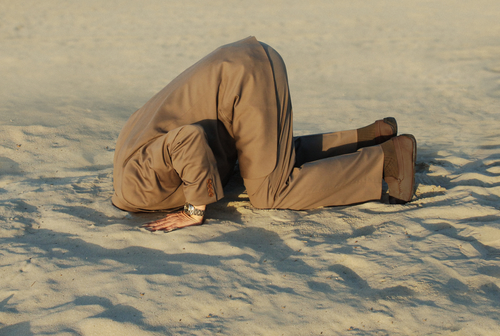
Most everybody has experienced this feeling of wanting to avoid something hard or painful, or just plain inconvenient.  Like most people, I’ve got lots of balls in the air that I’m juggling, and most days I keep those balls in the air. Occasionally they come crashing down.  When that happens, what I want to do most is simply stick my head in the sand.  Because of the excellent writers of a hit sitcom, I now have the words to apply to these feelings.

Sometimes it’s less serious situations when the “I Don’t Wanna” comes into play.  For instance, a social obligation, a work function, or a school activity…ring any bells?

Usually it’s the big matzah balls of life that trigger my I don’t wannas.  For instance, last summer the sleep-away camp doctor called about my daughter.

“Have you noticed a goiter on your daughter’s neck?” she asked.

Anyone who’s watched Seinfeld knows that I imagined a goiter the size of a second head. I hadn’t seen my child for three weeks, but I had never noticed a goiter before she left.  Time for a maternal gut-check—Did I not notice a goiter? What kind of mother could have missed a goiter?  Fortunately, her goiter was in reality very subtle and unnoticeable to the untrained eye.  It turned out she has Hashimoto’s Disease, an autoimmune disease that attacks the thyroid, is easily treatable and for which you see an endocrinologist. Seriously? This is my fourth kid and I have to deal with new and exotic illnesses? I really don’t wanna.

On a bigger scale, it seems that I have to begin contemplating how the rest of my disabled son’s high school career will play out.  I met with a “transition” counselor at his school recently.  She gave me a notebook with a lot of information and advice on applying for services with various agencies and scenarios of the different options available to my son.

First of all, the notebook made me chuckle. Through various projects and committees over the years, I have categorized people into “notebook” people or “folder” people.  Notebook people are extremely organized, with papers neatly arranged by tabs.  Folder people are those who have all of their papers shoved into a folder.  I fall into the latter category.  I think of myself as a relatively organized person and can put my hands on the papers I need – I’m just not motivated to put them into notebook form.

But I digress.

I don’t wanna think about the next few years of my son’s life. I want a typical fifteen-year-old with typical fifteen-year-old problems. The thought of applications, forms, evaluations, assessments, meetings and decision-making makes my chest tighten. I have put the notebook away for a while but I know I will open it one of these days and do the things I need to do.

I realize that “I Don’t Wanna” is essentially a manifestation of denial. I suspect it is a universal feeling that people use to cope with stressful situations. Denial often gets a bad rap, but I find it can be healthy in small doses.  A petulant child lives within me and sometimes pays me a visit in trying times.  Instead of crossing my arms and stomping my feet, I just enjoy a few quiet days of  “I don’t wanna” and my semi-ignorant bliss before doing what needs to be done.

You could try it sometime, if you wanna.