Bittersweet Sixteen

sweet-16-birthday-cakes-pictures

My son with special needs turned sixteen last week. My father reminded me to say a prayer, expressing gratitude for having raised him to this point in time. I am thankful that he is happy, loved, that he walks and talks.

It is, however, bittersweet. Oddly enough, I am most sad that he is not on his way to driving a car – the highlight of turning sixteen for most teenagers in the United States. The ability to leave the house and your family and find your own way is liberating.  I still love to hop in my car and drive away sometimes. Except this time I’m running away from my children. Sweet separation. My eldest son is seventeen and he drives. His little sister once asked where her brother, the new driver, was.

“Out,” I answered.

“Why?” she asked.

“Because he can,” I told her.

I vividly recall my elation at getting my license and the incredible freedom I felt. I remember going “out” as often as I could, to that elusive place where parents can’t find you. Nowadays children can’t be as unavailable as they’d probably like, poor things, because of the homing devices that are their cell phones.

It makes me sad that my second son cannot go “out,” although he doesn’t seem to want to. He is not focused at all on the fact that he is not on the driving trajectory. In fact, he would probably be happy to stay “in” for the rest of his life. He’s happy surrounded by his family and his beloved video games. It’s tempting to let him stay in forever, to keep him safe and sound.

“Maybe he could try taking the driver’s ed course, to see if he could even pass?” I mused to my husband and other children.

They all dismissed the idea as ludicrous. He would be a danger to himself and others, they argued. His lack of attention to the world around him could have disastrous consequences. Are we selling him short? Am I crazy and deluded? Maybe a little.

It’s part of the ongoing see-saw of raising a differently-abled child. I am grateful for the things he is able to do but the grief for what he can’t do lurks in the background. His brothers are tall, strapping young men like their father. I encourage this son to consume as many calories as he can, so that maybe he can be as tall as his five-foot-four-inch mother. I cling to things I may have a touch of control over, to maintain an illusion of normalcy.

There is a popular essay which is given to many parents when they have a disabled child. It is called “Welcome to Holland.” The gist of it is that you were planning a trip to Italy and were shocked to find you arrived in Holland. Once getting over your disappointment at landing at the wrong destination, you look around and discover the beautiful things in Holland. It’s a lovely metaphor to try to make you feel better about the immense sadness and disappointment you feel when you have a less-than-perfect child.

It works for a while, perhaps getting you through the early years of crushing hardship and disbelief. I have a group of women friends who I met in a support group ten years ago, all who have disabled children. My “Special Mom” friends, I call them.

“Holland sucks,” we wholeheartedly agree.

But here we are. We strive to savor the sweet and tolerate the bittersweet.

So Happy Birthday to my young man. Who cares that driving’s not in your future? I’ll teach you how to ride the bus.

 

The Closet of Many Sizes

clothescropped

The Jewish holidays are upon us once again. How to make them meaningful? Who to invite over?  What will my menu be? And the most difficult question…what will I wear? Not in the fashion sense-who’s looking at me way. But in the what- will-fit or what-size-am-I-this-year way?

Thank goodness for the closet of many sizes.

My weight, like many people, fluctuates. Some may view me as chubby, others might see me as thin-ish. What really matters is how I see myself. I can accept growing older and my changing body. I can try to hide the lumps and bumps that come with my life experiences. Four c-sections and nursing babies came with a price to my body. But I don’t need to give in to food and give up on keeping my weight at a place that’s comfortable for me.

Sure it’s difficult.  I love food. The challenge is finding the balance of enjoying food but not letting it get the better of me. How can I drop that extra 10 pounds? Here it is – the secret to losing weight…eat less and get off your tush. Simple? Yes. Easy? Not so much.

The dieting world is a multi-billion dollar industry for a reason – people want to look good and be healthy.  My favorite weight loss program was Weight Watchers, which helped me get a handle on my weight a few years ago. But then I got lax and whoop, there it is – the weight creeps back up. We all have heard the reasons why people overeat – because we’re happy or sad or lonely or bored. We eat because we’re hungry or because food’s delicious – whatevs. No matter the reasons, we’re alive therefore we eat.

I learned about healthy eating from my mother. She was so darn healthy, it was annoying at times.  She was very aware of what she ate but not in an eating-disorder kind of way. She always kept her weight in check, generally looking better than I did. She truly could have a bite of something delicious, or just one cookie – that is not in my genetic code.  I admired her healthy eating and emulated her as much as I could, but unfortunately I am more of a textbook glutton.

I hate my closet of many sizes, yet love it all the same. The jeans from when I was my skinniest hide in the corner, mocking me and daring me to ever fit into them again. Then there are my “fat jeans,” my reliable, comfortable old friends – I hate fitting into them but am grateful they are there to welcome the larger me . I can’t bear to shop for a bigger size.

I will mentally set my brain to “lock-down,” and try to control my excess eating and exercise more. My food strategy can be compared to the mullet – business during the week and a party on the weekend. It takes some will-power and determination. And a touch of vanity. I make no grand proclamations and take it a day at a time.

Starting tomorrow of course, after a last supper of Peppermint Patties and Chardonnay.


Goodbye House

043

My father is selling his house of 37 years.  The house he built with my mother that reflects their vision, design, and love. My mother’s been dead for almost a year. My father followed the advice he gave to others, as an attorney, and did not make any big changes for a year.

Compared to losing a loved one, all other changes seem superfluous. People ask me how I feel about my father selling the family home. I feel oddly detached about it.  Losing my mother was hard. Saying goodbye to a house feels easy by comparison.

It is a beautiful, unique, light-filled contemporary home. My father was always so tickled when people he met mentioned that they’ve been in our house and how nice it was. True confession time, Dad. Whenever you and mom left town and had the poor judgment to leave us home unattended, I had scores of raging parties there as a teenager and young adult. It was all part of the joy of that wonderful house. Ah, good times.

Then I grew up and appreciated the house as a home. I brought my husband to meet my parents there, celebrated many occasions together with my own children and their grandparents, gathered for holidays, and nestled in for quiet times. I went there to tell my parents I had breast cancer. My mother died in that house.

Somehow the house lost its soul when my mother left this earth. My Dad keeps up the house beautifully, but as he says himself – it’s just not the same. The house is no longer the center of the family without my mother there. It’s just a house. I’m grateful that he’s able to get it ready for sale on his own. My mother, in her infinite wisdom, had been thoughtfully distributing her things for years to her children and grandchildren so there is not an overwhelming amount of “stuff” for my father to sift through. In fact, the social worker in me thinks it’s a lovely way for him to do “life review” as he goes through the memorabilia of his 54-year married life with my mother.

It will be strange to visit my father in another home. My sister and her family will have to stay with me when they come to town to visit, which is a bonus for us. It will be very strange for her, I’m certain, to lose her home-base.

So yes, I’m okay with the selling of the house. My grief is settling into a place where I can be less sentimental and more practical. Keeping that house won’t bring my mother back. As long as my father’s ready for the next chapter, I too can move on.

Like the saying goes, home is really in the heart anyway.


Sultry Housewife

sultry housewife

Lauren Bacall died recently. The NY Times banner that came over my phone read – Lauren Bacall, Sultry Movie Star dies at 89.

Sultry, I thought, what an awesome word. Then I thought, what are the chances that I would be remembered as “sultry?” Sultry housewife? Sultry blogger? Unlikely. A girl can dream though.  If I’m not sultry, how will I be remembered? And no, nothing is wrong with my health. I’m just speculating, something a blog allows me to do.

Funny? I’d like that. Authentic? Yes. Earnest? Definitely not. Kind? Most of the time. Smart? About some things. Outgoing? Most certainly. I never married a Humphrey Bogart-ish celebrity but I did marry Brad Stillman – a legend in his own right. Yes, he proofread this and allowed it to stand as is. He too has a sense of humor and is very humble about his greatness. He thinks I would definitely be remembered for having excellent taste in men.

People don’t use the word sultry often. I think it’s a great word. It’s sexy, but in a classy way. It also makes me think of another word not frequently used – slatternly. Sultry means “attractive in a way that suggests or causes feelings of sexual desire.” Slatternly, on the other hand means “untidy and dirty through habitual neglect” or “of, relating to, or characteristic of a slut or prostitute.” The line between sultry and slatternly…where is that line? I just hope I end up on the right side of it.

Don’t worry, I’m not in danger of sliding to the dark side.  Been there, done that, in my younger days. No, like Lauren Bacall, I’m deep down just a nice Jewish girl.  While “sultry” may be the word most associated with Lauren Bacall, her friend Sally Quinn also described her as “funny, razor sharp, mischievous, iconoclastic, self-deprecating and openly vulnerable. She shared her life with her friends and radiated a feeling of trust that was always returned.” Wow, she sounds like the kind of person I would like to hang out with.

Does sultry housewife have to be an oxymoron? Must these words be mutually exclusive? I don’t think so. I recently heard a lecture on relationships. The speaker talked about how women (and men) put their best self forward whenever they go “out.”  Out to work and out with friends. Yet often we wear our least attractive, most comfortable clothes when we are in our homes.  What a novel idea – to look as nice in the house as you do when you go out?  Put your best self forward for your spouse or partner. Not in a June Cleaver, pearls and formal dress kind of way, but in a way that says I’m in this relationship and care about nurturing it and keeping it fresh. I can get with that notion.

Don’t get me wrong – I’ll hang on to my sweatpants. I’m not crazy. But I will wear them sparingly.  Just like Lauren Bacall probably did.

The Lost Art of Hospitality

hospitality

People don’t seem to entertain much in their homes anymore. Maybe it’s their busy lives or a lack of confidence in their cooking abilities, or their self-consciousness about their homes. I like to have people over. Not all the time, of course. I love going out to eat where someone else has planned the menu, shopped for the ingredients, cooked and cleaned up. It’s generally worth every penny.

What makes a meal great for me is the company.

Home hospitality invites people into your private world, if you are so inclined. Some people find it too invasive and stressful.  For me, it is a way to connect with people and share values and customs. My children learn how to be hosts and hostesses.  They have to engage guests in conversation, make everyone feel welcome and comfortable, and help with the dishes. They put their devices down and make eye contact. And they learn to speak with adults who are not their parents, teachers or coaches.

It doesn’t matter if you buy prepared food and serve it on paper plates or cook a feast served on your china and crystal. After all, what’s the use of having all those beautiful things if they are only going to be used as decoration behind glass or stored in a closet? Using them lends beauty and a special aura to a meal. It creates memories for our children, who will in turn be happy to use them when we pass them along the family chain.

My mother was a master of entertaining. She made everyone feel warm and welcomed. She was so skilled at making her table look beautiful and her food delicious while also pleasing to the eye. She prided herself on “assembling” meals, a mixture of store-bought items which she would masterfully spruce up and home-made foods. I can only share this secret now that she is gone. I think she wouldn’t mind. Okay Mom?

The truth is, people are happy to be invited and not have to cook.  Unless you’re a world-class chef or the food is vile, no one will remember what they ate. And no one cares if you spent days slaving in the kitchen or merely a couple of hours. What they will remember is the feeling they had while in your home.

Priceless.


“Not Guilty”

notguilty

My husband is a very competent, caring person. While I was away on a recent trip to Israel, he managed to successfully get all four of our children off to camp. Although this is an impressive feat, let’s be real – yours truly made the fifty trips to Target and did the actual packing prior to my trip.

I called him on my last day in Israel as he was driving our son with special needs, the remaining child at home,  to sleep-away camp.

“Ben had a bad day yesterday,” he reported.

“I’m sorry,” I said.

“It’s not your fault,” he replied.

I appreciated his kindness. I felt sad that my son had a bad day and that my husband had to deal with the unpleasantness for several hours. Usually I am the one at home who has to deal with these episodes.  I am thankful he’s a hands-on dad. And that he didn’t try to make me feel bad for being away from home.

I hung up the phone and told my friends what had happened.

“I don’t feel guilty,” I explained, “I just feel badly for them.”

“What a novel concept,” one of them said, as if a light bulb had gone off over her head.

Feeling guilt, like so many other things in life, is a choice, and it is one that I don’t often choose to make.  I come by a guilt-free disposition naturally. My family doesn’t do the stereotypical “Jewish” guilt. In fact I hate when people act like guilt is part of our heritage.  Am I perfect? No. Do I make mistakes? Yes. I try to learn from them and do better the next time. Done. Let’s move on people, there is nothing to see here.

Women often feel self-centered or selfish when they do something for themselves or not with their families. I say nay-nay. In the blink of an eye my kids will be gone. I want to keep growing and enjoying life in ways that are sometimes independent of my family. I don’t want to get mired in feeling badly for what I have or have not done.

When I got home, my husband was quite proud of how he managed all of the household duties and challenges on top of his job. It reminded me of the time he came home from a business trip and my chest heaved with pride having fixed a broken toilet, as if it was a major engineering feat. We both praised each other even though I’m pretty sure each of us was secretly thinking, “Do you want a freakin’ medal?”

I returned from my trip energized. A whole week of being Susan, not someone’s wife or mother, was refreshing.

Selfish? I don’t think so. Self-preservation is more like it.

My Return to Israel

image

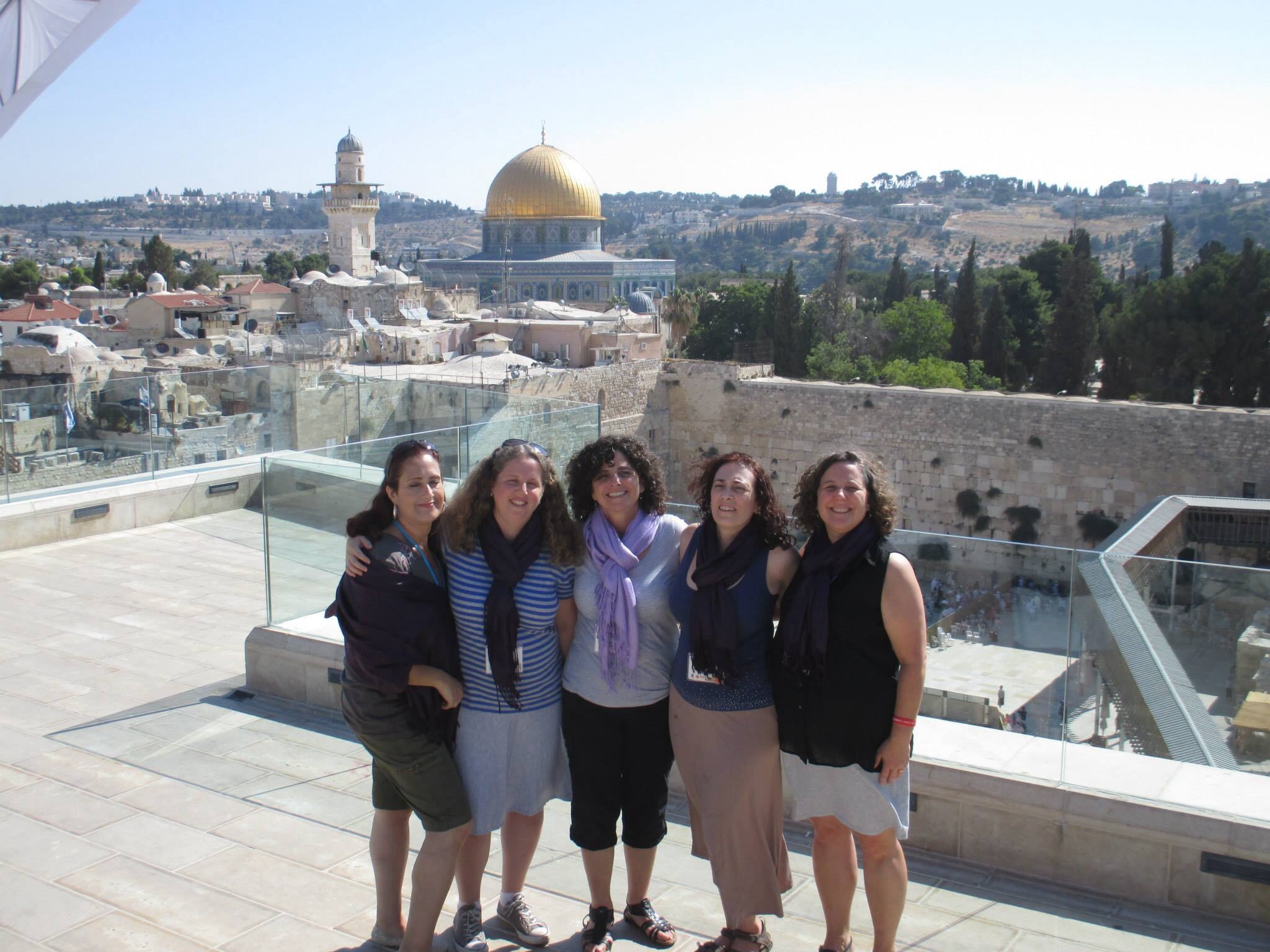
It’s been 17 years since my last trip to Israel when I came with my husband and new baby. My family has a strong connection to Israel, where my parents have owned an apartment in Jerusalem for 20 years. This time I am lucky to be with the Jewish Women’s Renaissance Project. This organization runs trips for women, mostly mothers, to expose them to Judaism and Israel in a deeper, more meaningful way.

I am very excited and happy to be back in Israel. My voice cracked with emotion when I called home to speak with my children to tell them about my trip so far. Where did that come from? I don’t really know, but it must be from the same place within me that was determined to come on this trip when others cancelled.

We feel very welcomed by the Israelis who tell us they are glad that we are here. Our contribution feels minimal but we are glad to shop and spend our money if that is how we can be helpful. Maybe our presence is our present? American friends tell us we are brave, but we don’t feel especially brave as we go about our business with our itinerary as planned. The most courageous thing I did this week was buy a piece of art without consulting with my husband. In my own way, I felt strong and decisive about that piece of art and it’s magical ability to help out the state of Israel.

I loved watching courting religious couples, meeting nervously for the first time in our hotel lobby. It reminds me that life goes on in this country, in spite of the incursion.

We are not oblivious to the situation surrounding us, although we have yet to experience air raid sirens or bomb shelters. We are reminded of the hardship and bravery of the Israeli soldiers when we meet Israeli mothers who ask us to say a prayer for their families. We share their worry and their pride.

I am just an ordinary Jewish woman who came to visit her homeland. It’s good to be home.

Desperate for Respite

images

I love the title of this essay and have been waiting for years to use it.  I always say this will be the title of my book, if I ever get around to writing one.

My disabled son will be going to sleep-away camp for two weeks soon, where he has gone for many years.  The camp specializes in caring for kids with chronic illnesses.

This Sunday, a week before he leaves, I am travelling to Israel on a women’s trip.  You must be desperate, you may think. Or crazy. Who goes on a trip to Israel in the middle of turmoil?  I am. This trip has been planned for months and I feel strongly that I need and want to go.

And yes, it gives me an extra week of respite from my child with special needs.

I don’t really feel as desperate these days as when my son was younger.  His health is stable as of late, so it’s his day-to-day care that becomes part of my daily grind.

Unlike typical people who graze when their stomachs tell them they’re hungry, I have to remind my son to “feed himself” 5-6 times a day with formula through his feeding tube.  He can do this independently. He is typical in that his face is generally glued to some sort of screen or device, so asking him to attend to this task progresses quickly from the nice, calm request of “Ben, please come feed yourself”  to “Ben, come feed yourself NOW!!”  It exponentially increases my shrew quotient.

Add the medication three times per day, and it’s a carefully orchestrated care plan that has become somewhat rote for me.  The trickiest time to medicate him is at 4:30 a.m.  Unfortunately, the sleep-to-wake autonomic process can cause my son to have one of his “crisis” episodes. The medication eases this transition so he can awaken and have a good day.  If I oversleep or set my alarm incorrectly, things go downhill very quickly.  My husband and I share much of our son’s care. I do the early morning medications and he does the last feeding before bedtime (when I’m usually asleep.) It works for us.

When we had our first child, I became aware of the constant competition between my husband and I about who was more tired.

“I’m so tired,” I’d say.

“No, I’m so tired,” he’d reply.

We agreed to acknowledge we are both exhausted and to just be kind to each other.  Being tired is a state of adulthood. Whining about it doesn’t make it any better.  Either get some sleep or stop talking about it.

So I don’t complain about the early morning medication.  As long as it keeps my son functioning and happy, it’s okay with me.  I appreciate the occasional break when I can allow my body to wake up at it’s natural time. Or an afternoon nap.

I will definitely welcome the separation. Even if my respite includes an occasional air raid siren or bomb shelter visit, it is a different stress and hardship from my daily life but one the Israelis know well.

Desperate for respite – from my home to the Middle East – it’s something everyone yearns for.

Preschool Cred

shutterstock_203431999Last month I went to pick up my ten-year-old daughter who was swimming with friends at a local pool and came across a preschool “graduation” party.  They looked so little to me – it was hard to believe they would be kindergartners in September.  The teacher recognized my daughter’s friends as former students at her school.  I confirmed that yes, they had gone to that preschool but my daughter had not.

“She did go to preschool though; she is a preschool graduate,” I quickly assured her. The absurdity of my response struck me, as if my daughter’s pedigree was in question.

Now I’m at another transitional education point – my eldest child will apply to college in the fall.  This time there are three adults (I know – it’s generous to call a 17-year-old an adult) involved in this decision, not two. We hope we have instilled in our son the ability to allow his life to unfold organically. I guess we’re about to find out if he will apply similar criteria to the college search that we did for the preschool search:

1) Is it a place where my child will be safe and happy?

2) Will he have a variety of learning opportunities, both academic and social?

Beyond that, I am not sweating the small stuff and fortunately neither is he, at least so far.  I am confident that he will get into one of the 3,500 colleges and universities in this country.  He is a great kid with a “resume” that reflects his interests, capabilities and growth. He has an idea of the kind of place he’d like to attend, and we support him wholeheartedly.

“Remember the crib,” my husband and I remind each other.

When we were shopping for a crib before our first child was born, we looked at many cribs in an enormous baby store until our eyes glazed over.  They were all nice and would all do the job. Do we buy the super expensive most beautiful crib or the functional, practical one?  We settled on the latter.  We realized once we got it home that we didn’t remember what any of those other cribs looked like.  What made our crib adorable was the baby in it.

We apply the crib theory to most decisions in our lives: don’t agonize, go with your gut feeling, and trust your inner voice.  We’ve found you don’t need to treat every decision as if it’s a high-stakes, win-lose situation.  Generally, things turn out the way they are supposed to.

My children are all preschool graduates, from a few different “schools.”  They don’t remember their preschool years, but I do.  As long as they were in a place where they were safe and happy, that was fine with me.  The fanciest, most prestigious, most expensive schools were not the criteria we used to pick preschools.  Location and a good vibe was what we were looking for.

“I thought you sent me to school to learn,” I told my mother when I sent my first child to preschool, “but it’s the best child-care ever!”

It was an epiphany for me. I was not the mother weeping when her two-year-old went off to class for three hours, twice a week. I was the one skipping happily out of the building to savor a few hours of freedom.

College will be a different experience, but maybe not so different.  Yes, he will study and learn. And he will put into practice the lessons he learned in preschool like how to use his words, how to share, and how to keep his hands to himself (hopefully.)  He will start out in a dorm with people looking out for him.  Something tells me I won’t be skipping away when we drop him off.  What a difference a few years makes.

I try to keep it all in perspective – a happy and independent adult is the goal, however he gets there.


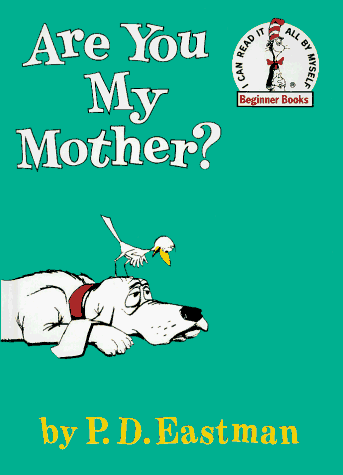
Are You My Mother?

Are You My Mother?


Areyoumymother

In my grief, my mind plays tricks on me. Whenever I’m out walking the dog and I notice a bird resting on a mailbox, I think that it’s looking at me.

“Mom,” I ask?

I like that fleeting moment of thinking my mother is checking on me, before the bird flies off. Do I actually believe that the bird is my mother? Not really. But I do believe her soul is floating out there somewhere, briefly inhabiting things that brought her joy and remind me of her.

Like the flowers I’ve planted outside of my kitchen window.  With a large family, I spend what sometimes feels like an eternity washing dishes in front of that window. Those flowers bring a bright spot to the monotony of the chore.

Recently I was at our neighborhood pool and I thought someone was speaking to me when they said to a person near me, “There’s your mother walking into the parking lot.”

“Really?” I thought.  My head popped up, looking and hoping with all of my heart that I would see my Mom walk into the pool.

Or the time when I had a meeting at my house and was putting out cans of Diet Coke. On the side of one of the cans, it said “MOM.”

Apparently it’s a new promotion of Coke and there were labels on other cans, such as Dad and BFF.  But I first noticed the one that said “Mom.” Could it be a sign? My mother always chided my sister about her Diet Coke consumption – she worried about the chemicals. Since I lived near my mother and therefore did not stay in her home as my sister did when she came to visit from out of town, she was unaware of my Diet Pepsi habit. My sister bore the brunt of that motherly concern. Should I not serve Diet Coke?  In my opinion, it is inferior to Diet Pepsi. Mom, what are you trying to tell me? Crazy, I know, but it made me laugh.

I often think I see her in the grocery store where we both shopped. It’s weird, the times and places that make you long for a person.

My father still lives in the home he and my mother made.  It continues to feel like her house.  Going there makes me feel close to her and very sad at the same time, as if she should be walking in the door any minute.  I think it’s both a source of comfort and sadness for my Dad.  How long will he keep the house?  Time will tell.

So I keep looking for my mother all around me…in the eyes of strangers, the beauty of nature, the hugs of friends and family, and in my children.  Mostly I guess she is within me.

Maybe someday I’ll stop looking so hard.