Cave-Woman

caving

Many people begin the parenting experience by making grand proclamations about how they will raise their offspring. Things like, “my child will only watch educational television,” or “my child will only eat healthy foods.”

Then life happens and those strong feelings get tempered, those little babies become people who speak and have opinions, and parents learn to juggle their wants and desires with those of their children.

Sometimes we get beaten down and cave to their incessant demands. In my house, this has played out recently in the form of an iPhone. My husband and I were so proud of ourselves for holding out and not buying an iPhone for our oldest child until he was seventeen, which was last year. “What does he need it for?” we asked. “He has a perfectly good phone. And an iTouch.” Being the dutiful firstborn, he accepted his fate and didn’t press too hard on the subject. So we eventually relented, telling ourselves that he’ll be in college soon.

Ah, but it’s a slippery slope. Now our 13-year-old is lobbying hard. I find that I just don’t feel as strongly this time as I did with our eldest. Maybe because smartphones have become the norm. Maybe because he never seems to have his plain, old phone charged or with him when I need to reach him.

“If we get him an iPhone, it will no doubt be attached to his body and fully charged and therefore he would be reachable, right?” I asked my friend, who also has a 13-year-old boy.

“Absolutely,” she said, “My son’s phone is never dead. I could be dead, but his phone – never,” she chuckled.

Yep, I see an iPhone in the future for this son, once I negotiate this with my husband. Poor guy, he recently attempted to use his legal prowess with our daughter on the very serious subject of her birthday present. He called me one day after dropping her off at school.

“I caved,” he said.

“Oh? On what?” I asked.

“A trampoline. For her birthday,” he announced, defeated.

I’m happy when my husband occasionally caves. Since I spend more time with the kids, I am the recipient of most of the asking, whining, and begging so of course I cave more than he does. I was glad to see my daughter go for his weak spot – it’s a good skill for her to learn. In his defense, he held out for well over a year before caving.

So the trampoline will grace our backyard, where the dog roams too. I’m the one who caved on the dog. I guess we’re even, for now.

Have we lost control or do the things we care about change over time? Once we were rigid about bedtime – now it’s only the eleven-year-old who’s asleep before us. I was talking with a friend about this.

“I’ve lost control of that, among many other things,” she said and went on to tell me that her neighbor has noticed over the years that the lights in their house stay on later and later. The whole world apparently notices our loss of control. What’s the neighbor doing up so late anyway?

I like to tell myself that I don’t cave on the things that I really care about like being a good person and having good manners. Oh, and being a good student – although I confess that I leave the schoolwork to the kids and their teachers. I assume they are doing well if I don’t hear anything negative from the school. I guess I’ve sort of caved on that too.

Ultimately my children will be the captain of their ships and will have to do their own navigating. In the meantime, I’m just trying to have smooth sailing.


A Post for the Holiday Season – How to be a Good Guest

???????????????????????????????????????????????????????????????????????????????????????

I was looking for somewhere to board my dog for a few nights next month. I came across a groupon type deal for a company that connects people who wish to board dogs in their homes with dog owners.

The idea of my pooch staying with a family is appealing. After culling through several pages of possibilities, I arranged a “meet and greet” with a woman who seemed to be a possible match for us.

My dog and I set off, in rush hour. What should have been a 15 minute car-ride ended up being 45 minutes. Lewey sensed something was amiss – I had to drag him up the stairs to the front door. We were greeted by the nice lady, her husband, and two pugs. At her suggestion, I took off my dog’s leash so he could explore the house.

A meet-and-greet is a nice way of saying that the boarding family wants to make sure my dog is not out-of-control and I want to make sure they are not psychopaths.

The woman and I sat down in the family room. She pulled out her notebook to ask me questions about my dog, who was being adorable and playing with one of the other dogs. As we continued our discussion, I followed her gaze to the left of my chair.

There, in the corner of the room, on the wall-to-wall carpet, my dog was taking a dump.

Really? After I went through all the trouble to find these people and shlep to their home, my dog is going to put the kibosh on the whole thing within the first five minutes by pooping in their house? I was mortified. He never does this, I assured them. It called into question my dog training skills. Maybe I was a terrible dog parent? Oh, the shame.

They were very nice and matter-of-fact about it. I quickly cleaned up the poop and the husband sprayed the anti-smell-please-don’t-poop-here-again-spray. He told me they’ve learned to take their dog guests for a walk as soon as they arrive as they can be agitated and out of sorts. Apparently my dog’s behavior was not as abnormal or abhorrent as I feared.

We finished the interview and talked about the dates I needed the dog to be watched. They seemed like they were actually still willing to watch my dog – I couldn’t believe it. I figured when I got home I would receive a text saying that something had come up for them and they wouldn’t be able to watch Lewey. You know, the doggie version of “it’s not you, it’s me.”

I felt as if I had ruined a first date. We did the walk of shame out to the car. I called my husband and my sister.

“They’re dog people,” my sister reasoned, “they’re used to this stuff.

To my surprise, they accepted my official request through the boarding website to watch my dog. I will plead with him to be a super good boy and do all of his business outside.

I hate to leave him, but sometimes duty calls.

May your Thanksgiving celebrations include only well-behaved guests.


Ready to Launch

????????????????????????????????????????????????????????????????

I am in launch mode. My oldest son is applying to college. This transition is not so fraught with anxiety for me – he will have great options and after all, it’s still months away. Rather, my immediate focus lies at the top half of my sandwich – launching my father.

Many people live far from their parents, some happily and some not so happily. I have had the good fortune of living in the same area as my parents for the past 25 years. They helped me with my children – they babysat, drove them around, and provided a lot of love and support. I helped them as my mother became ill and died last year. My parents have had an apartment in Jerusalem for the past 20 years where they went two or three times a year for six weeks at a time. But Maryland was still home base.

My father has decided to make Israel his primary home. I admire his ability to re-engage in life after losing his beloved wife of 54 years. I applaud his continued interest in living and his desire to have a full, meaningful existence. He has been drawn to Israel for as long as I can remember. He likes the people, the history, the religious life, the politics, the culture and the language. He loves living in a vibrant, active city. My mother liked it too, but not enough to livef there full-time. After she died, my father gave himself a year to regroup and form a plan. He seized this opportunity to fulfill his dream to live in Israel full-time. I say good for him. How many 78-year-old men, or women for that matter, can do that? I wrapped my mind around the fact that he was leaving and gave him my blessing. He forwarded his mail to my house, locked up his house and left.

Do I worry more for my father’s safety in Israel than I do in the United States? No. Fortunately I do not have a worrying disposition and he is not worried. I do appreciate the e-mails he sends after any attacks in Jerusalem to tell me he is fine, including the most recent heinous attack in a synagogue.

I don’t feel abandoned by my father. I am secure in our relationship, no matter how his life gets intertwined in new peoples’ lives. I feel my father’s presence and love, no matter where he lives, similar to how I feel about my mother’s spirit. As he always says, the world is much smaller than it used to be with the array of technology at our fingertips. We are never further than an e-mail or text away.

We have spent a lot of time together in the fourteen months since my mother died – it will be nice to have time to miss each other.  We knew each others’ schedules and whereabouts at all times. I’m sure he will appreciate the break from my watchful eyes. My immediate family will miss having him such a part of our daily lives, but as he says, the kids are getting older and going in their own directions. No need for him to sit around here and wait for them to throw a little attention his way. He can e-mail and text them to keep in touch too.

I am grateful that we had each other to lean on during the difficult time after my mother’s death. He’s a wonderful father. But I am thankful that he is healthy and able to pursue his passion.

It’s been two weeks since lift-off…so far, so good.

Miss Manners

??????????????????????????????????????????????????????????????????????????????????????????????????????????????????

“When are you leaving?” my 10 year old daughter innocently asked my sister during her recent visit.

“Naomi!” I chided her, “that isn’t a nice question.”

I flash-backed to years past when I asked the same question of my uncle when I was a child. My mother taught me that it is more polite to say instead, “How long will you be staying?”

I relayed this story to her and we had a pleasant little discussion about how posing the same question in a more positive way can make the visiting person feel better. My daughter then continued to hang around while my sister and I wanted to talk privately and have grown-up conversation.

“Naomi, how long will you be staying?” my sister asked with a smile.

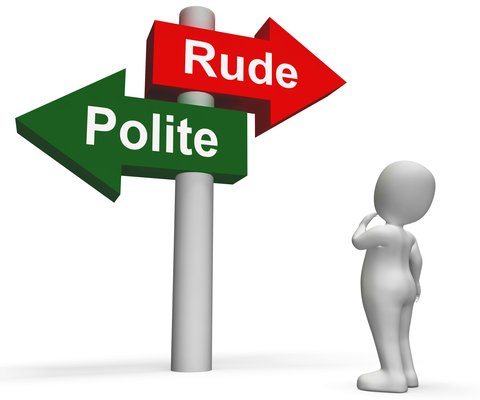
All parents want to raise polite children. Why? Honestly, because they are a reflection of us and we want our product to perform well in the world. Also, we want them to be pleasant and productive members of society. Good manners and general amiability will always get you farther in life. On those occasions when a friend or teacher will tell you unsolicited how nicely your child behaved when you weren’t around, admit it, you feel like you won the gold medal in parenting. Even if said child can be a pain in the neck at home.

There are several fundamentals that I strive to impart to my children. Clearly, this list is not exhaustive.

  1. Proficiency in please, thank-you, no thank-you
  2. Making and maintaining eye contact
  3. Offering a firm handshake
  4. Maintaining a reasonable appearance
  5. Crafting a basic thank-you note
  6. Demonstrating basic table manners
  7. Being a good host/guest
  8. Being a good citizen: holding doors, giving up your seat, helping with luggage, etc.

Technology has added further wrinkles into the art of civility. No one would like it if someone stood outside of the door of their home and listened in on a phone conversation, yet so many are guilty of talking loudly on their cell phones for all the world to hear. One of my pet peeves is when people talk on the phone while checking out at a store, ignoring the person who is helping them. To me, that is the pinnacle of rudeness.

Many of us are guilty of checking our devices compulsively.  I was recently with my son, who was looking at his phone as we waited in the examining room for the eye doctor. When the doctor came in, I was pleased to see my son put his phone in his pocket. When the doctor left, he resumed his phone play. It irked me that he didn’t give me the same respect he showed the doctor but at the time I chose not to fight that particular battle.

I am, however, on the warpath occasionally. Electronic devices do not constitute a “manner-free” zone.

“No screens at the table,” I remind the kids.

“Read, talk to each other, or stare off into space,” I suggest, when they protest.

Or maybe experience those most awful, dreaded, very terrible things that no one can tolerate in this day and age – being alone with your thoughts or maybe even good old-fashioned boredom. Oh, the horror.

Teaching manners is part of the job of parenting, just not a particularly fun one.

So, again, thanks so much for taking the time to read this essay. I really appreciate it. You may now resume playing Candy Crush and checking Facebook on your Iphone.


You Can’t Take it With You

clutter

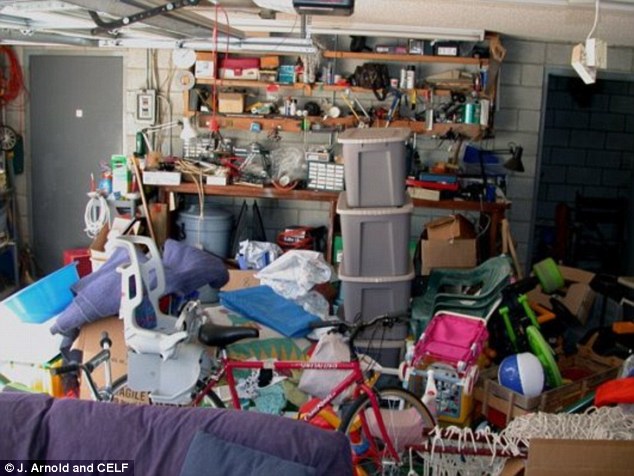
I’ve got too much stuff. The trickle-down effect of my father cleaning out his house is that I am forced to clear out mine. I love getting rid of things almost as much as I like getting new things. My husband thinks I am missing the sentimentality gene, but I disagree. When push comes to shove I am just not that attached to material things.

My father is the anti-pack-rat. Nothing collects dust in his house. If you leave a glass on the counter for more than two minutes it is quickly put into the dishwasher when you’re looking the other way. He is on a mission to rid himself of all things superfluous. I admire this – it’s quite Zen of him. My sister jokes that he will soon just have the clothes on his back and his car key. He makes daily visits to dumpsters and Good Will. I get regular visits when he brings things he thinks might hold sentimental value for me.

He called me to ask about my late mother’s voluminous and meticulous medical files.

“Get rid of them,” I said.

While keeping notes gave my mother a feeling of control over her various ailments, it would just make me sad to look through those piles. Why remember the bad things in detail? I know the basics of her medical history as it might pertain to me or my children. Beyond that, what does it matter?

I keep only scant records of my special needs son’s medical and educational journeys. I don’t want to read back on years of schooling and testing to remind me that his life has been hard. I don’t care to remember the annual school planning meetings, various testing, and assessments. I keep things that make me remember the good times of his life so far, not the mediocre or painful.

We’ve cleaned off the bookshelves – no one wants to read an old book with yellowed pages. We got rid of the crib and the highchair, though my husband objected. Really? Our “baby” is almost eleven. Carpet remnants, old paint, old toys, out of style clothes – gone. Looking through a box of things from my childhood, I found a small bean-bag stuffed animal – a frog – with a missing button eye.

“Do I save something if I have no recollection of why I kept it?” I asked my husband.

“Maybe you can find someone who can help you remember,” he answered, generally erring on the side of caution when it comes to getting rid of things.

I’ll keep it for a little longer in case the memory comes to me or I find someone who can fill in the missing piece, although I’m not sure who that might be. If not, out it goes.

I actually feel lighter when I look around my house after a good purging. I see things that are being used and enhance my life instead of feeling bogged down by remnants of the past.

It’s only stuff. Lighten up.


Sisters

sisters

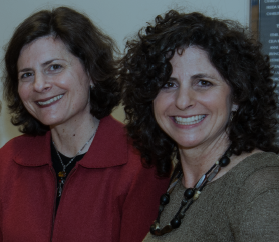
My sister recently came to visit with her kids. She usually stays at my parents’ house, but since my dad has put it on the market, we decided it was best that they stayed with me. My relationship with my sister is something I treasure. She is my friend, my therapist, my superego. We realize how fortunate we are. Not everyone has a sister, or one they like so much. While we have different personalities, we look and sound very much alike. I’m an extrovert, she’s an introvert. I drink Diet Pepsi, she drinks Diet Coke. My hair is curlier. She’s taller. I’m a party girl, she’s a jock.

It’s an odd phenomenon for people to think we’re twins when we are not. I once asked a stranger outside a movie theater if he could recommend a restaurant in the area. He said, “Is your name Judith?” He had gone to high school with my sister, who is four years younger than me and has lived out of state for many years. It’s a little unsettling to freak someone out by your mere appearance. But it’s also kind of cool – it’s our little party trick.

We have a running dialogue, a stream of consciousness free-association, daily conversations with the threads picked up seamlessly, sometimes in mid-sentence. On the rare occasions when our husbands choose to answer the phone, we are called to the phone merely by the word “Sister.”

Having a sister as your bestie has many benefits. We have the same frame of reference from being raised in the same house by the same people. We know all of each other’s friends, who become our friends too. We are the head of each other’s advisory boards. No subject is too big or too small to be discussed – we cover the gamut – marital squabbles, parenting concerns, the merits of the HPV vaccine, SAT versus ACT and how to make chicken schnitzel.

As the older sister I often tackle issues first. By the time my sister was planning her first bar mitzvah celebration. I had already planned two. Here is a typical exchange:

HER: “Assigned seating or open?”

ME:  “Assigned – people need a home base. Wandering around looking for a seat causes even the coolest people to feel like losers. Do your guests a favor and help them avoid social anxiety.”

HER:  “Place-cards?”

ME: “Not necessary – just slap up a list with table numbers and names.”

HER:  “Hospitality Bags – what goes in them?”

ME:  “2 waters, fruit, savory and sweets.”

HER:  “Didn’t Mom say that a certain percentage of the people who rsvp’d won’t actually show up?”

ME:  “Yes, 20 percent. Stuff happens.”

Fortunately, we have similar parenting styles in that we are basically just winging it day by day. Our approach is that we have no official parenting approach. We learned early on that we resort to using the same expletive when pushed to the limit by our children. We figure we must have gotten it from our mother, although she had no recollection of using un-ladylike language.We try to keep in mind one of our father’s go-to parenting slogans, “Don’t get too high with the highs or too low with the lows.”

Neither of us is much into fashion but we are our mother’s daughters so we try to put ourselves together. After our mother died three weeks before my nephew’s bar mitzvah last year I had to return a beautiful suit she had bought for the occasion. Our mother was petite and we are not, so neither of us could wear it. We joked that our mother would have looked better than both of us, which she usually did. We didn’t mind. We felt proud to have such a beautiful, stylish mother even if we sometimes felt like her frumpy daughters.

I often went with my mother to her medical appointments. Once, as we waited to be seen by the doctor, we sat across from each other in the exam room.

“I don’t like that jacket,” my mother said.

“Really? I got it at Target. What don’t you like about it?” I asked, somewhat amused.

“I don’t like the color or the fabric,” she casually explained.

I went home and promptly called my sister with this breaking news.

She said, “You’re getting rid of that jacket, right?”

“Absolutely,” I told her.

Mother was generally right about these things.

Like our mother, we are both practical and like our father, we are direct. We’re comfortable with who we are and generally say what’s on our mind. We enjoy being with other people but equally enjoy being by ourselves. We each lived alone when we were single. We loved the solitude, quiet, and autonomy. When I showed my kids where I used to live before I met their dad one of them asked me who I lived with. I told him I lived alone. He thought that was sad. I relayed this story to my sister.

She, as usual, hit the nail on the head when she deadpanned, “If you call the happiest time of my life sad.”

Life has occasionally tossed me lemons, but not in the sister department.


My Mother’s Hands

dr-sears-mother-hands-and-child-handsSitting in synagogue recently for the High Holidays, I thought of my mother, as I often do. This was the first round of High Holidays that I wasn’t reeling with fresh grief. Jewish holiday services are long – often lasting several hours. As my children sat briefly with me, I was reminded of all the times I sat with my own mother when I was young. Like most children, I found the services to be excruciatingly boring, so I passed the time counting the pages until the service was over or the minutes until I could be excused to roam the building with the other children. I also spent a lot of time looking through my mother’s small purse with its sparse contents for synagogue: kleenex, lipstick, a hard candy or two.

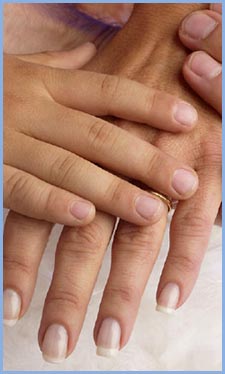
This year as I was sitting in the sanctuary, listening to the service, feeling introspective, I was struck by the memory of my mother’s hands, as I looked down at my own. I remember examining her jewelry and playing with her rings, trying them on to see what it felt like to  wear grown-up jewelry. Her hands and fingers were toys to keep me entertained and quiet. I admired her nail polish. I remember the feel of her skin as well as her sidelong glances, smiles, a warm embrace or her fingers entwined with mine.

I watched my mother’s hands change from those of a young woman into those of an older one with age spots and pronounced veins. They remained well-manicured but suffered from the cold and arthritis. As a grown woman, I continued to sit with my mother whenever possible. I still tried on her rings and was the happy recipient of a squeeze of the hand or a pat on the knee. These memories evoke feelings of security and being loved.

My daughter just discovered the game, Cat’s Cradle. She earnestly studied the book to see how to make various patterns and shapes with the colorful band of string and then asked me to play with her. My hands miraculously remembered just what to do. I was astounded by their memory, as was my daughter.

Now I’m the Mom, with middle-age hands. My daughter looks through my purse, plays with my jewelry and pleads to be released from the service. I hold her hand and try to placate her boredom.

I’m paying it forward, with my hands.


My Own American Werewolf

002800americanwerewolflond

I used to have a darling third child. He was born six weeks premature but quickly exploded into a blonde dumpling – an anomaly in my house of brunettes. He was an adorable child – fun, funny with a delightful disposition. He was a pleaser and very affectionate, so much so that my husband and I nicknamed him “The Drape” because he would hang on us at any opportunity. A touch smothering but basically adorable.

Now he’s thirteen. His mood generally morose, he is most often found with his head attached to headphones and watching television shows on the computer screen. I have to remind him to do the things he’s supposed to do –  homework, shower, eating, etc. In all of our interactions he’s either snippy, spacey, or both.

“Huh?” seems to be his bewildered response to every inquiry.

I know this is the norm for an adolescent. What sets this child apart in our household is the rapid transformation from adored child to exasperating teenager.

It is my experience that when a child irks one parent, the other parent is able to swoop in and valiantly play defense attorney for the young offender – the champion of the poor, misunderstood child. I think that’s part of evolution, so we don’t kill our young.

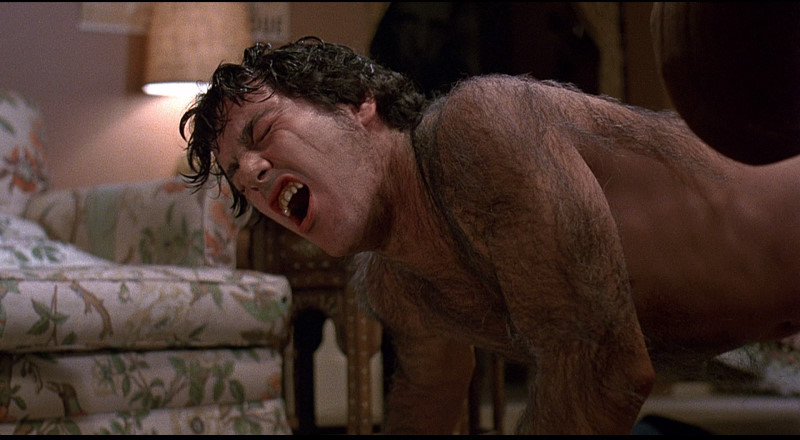
For me, adolescence can be summed up by the 1980’s movie, An American Werewolf in London, where the main character, an adorably boyish looking twenty-something, periodically morphs into a terrifying werewolf. Our children, once so pure and pristine suddenly begin “the change” into adulthood. Their faces temporarily appear out of proportion, they get acne, their limbs are gangly, their hormones surge, until they become a creature that we hardly recognize. Oh, how I long for my cute little boy.

I am fairly confident that he will come out okay on the other side of adolescence, if I don’t kill him first. I see little glimmers of hope from time to time – watching him laughing with friends or playing charmingly with little kids. Deep down the sweet little boy is still there. Even werewolves must love their mothers, right?

It is clear to me now that my experience of adolescence as a parent to three boys has all been one giant preview to the main event that awaits me in the near future. My daughter turns eleven next month.

Pray for me.

Just Say Yes

volunteering

Volunteers. Selfless, noble, doers of good. God bless them. That being said, I must confess that my knee-jerk reaction is to say “no” when asked to take on a volunteer job. I’m busy and don’t particularly want to put more on my plate. As I’ve gotten older, however, I’ve learned how the volunteer thing works – it’s about people and relationships that get things done. So I have had to re-train myself to think and act differently when considering volunteering. Philanthropy is defined as the practice of giving money and time to help make life better for other people. I can wrap my mind around that. I think we all can.

We cannot, however, all be uber-volunteers who say yes to just about everything. Those people are reliable, responsible, and ultra-competent. Frankly their efficiency is a little scary. Thank God these people exist. We can’t all be uber-volunteers. I certainly am not. Those people are a different breed, another level of other-directedness. I am more of the occasional volunteer and I’m comfortable with that.

While it’s worthwhile to get children involved in doing good deeds, I think there is even greater value in parents modeling volunteer behavior for them. Children watch and learn from how their parents conduct themselves. I heard someone speak once about the power of memory and how we remember our parents’ volunteer activities from when we were children. Were your parents always complaining about having to participate or were they proud of it? Your memories of your parents may guide how you view volunteering. My husband and I are very careful to put a positive spin on our volunteer activities so our children see it as a worthwhile and valuable contribution, one they will remember when they grow up and their time comes.

You can pick and choose what you volunteer to do – just do something. Unless you live under a rock, you are part of a community. My goal is to give back a little more than I take. Do I always achieve this? No. Sometimes I fall short. Socializing comes easily to me so I host and attend functions where I can serve as an ambassador for whatever organization I feel strongly about…drinking wine and chatting are in my skill set. Sometimes it’s important to go to dinners and events to support friends and acquaintances and the charities that are important to them, even if you “don’t wanna.”

Asking for money is a dreaded task for 99% of people, up there with public speaking. I hate it too. It feels intrusive and overly personal. But someone’s got to do it. I am not talking about paid, aggressive solicitors from random organizations. I mean people from within your community, from the organizations you’re associated with. They don’t ask for money to put into their own pocket for say, a home kitchen renovation. It’s for worthy causes. I try to remember that and cut the person some slack when they call me.

When I was recently asked to help with a fundraising effort, I was busy and distracted and desperately wanted to say “no.”

Instead, what I said was, “I’m not going to say yes, but I’m not going to say no. Let me think about it.”

I ended up saying yes. Next time you get the call to volunteer, consider answering it.


The Secret to a Good Marriage

old-couple-411758

We have all read the standard advice about how to have a good marriage. Strong communication, scheduling date nights, and not going to bed mad are some of the most frequently cited. I agree that these are excellent ideas. However, I have recently discovered what can be described as the purest display of love and devotion, an act that says, “I really care about you.” This pearl of wisdom, this key to marital harmony – leaving a spare toilet paper roll on the back of the toilet when the current one is perilously low. It’s really that simple.

I don’t know when this paying the roll forward started in my house. We didn’t discuss it. We just quietly started doing it. Nineteen years into our marriage and we’ve figured it out. A small act of kindness goes a long way. We’ve all experienced being stranded without a roll. It’s a horrible feeling of helplessness and extreme vulnerability. That spare roll is saying, hey, I’ve got your back – both literally and figuratively.

I was discussing our acts of bathroom kindness with my sister.

She said, “Yes, that is what that Love Languages theory is all about. You feel loved by acts of kindness. So do I. It must be in the genes.”

Gary Chapman, a marriage counselor, came up with this theory. He says each person has a primary love language that we must learn to speak if we want that person to feel loved. They are: words of affirmation, acts of service, receiving gifts, quality time, and physical touch. My sister proceeded to tell me that her husband has been doing the dishes lately, a task that she usually took care of. When she asked him why he was so eager to do the dishes, he told her that he knows it makes her happy when he does things around the house without being asked. Flowers and perfume aren’t her thing. Hence, he shows her his love by doing the dishes. What an interesting concept.

So many people routinely test their spouse to see if they remember the right occasions, buy the right gift, say the right things. This is a set-up for failure and disappointment all around. Everyone wants to be a good spouse. Maybe it’s as simple as stating what makes you happy, and meaning it. No hidden agenda or test.

I read an article by Sally Quinn several years ago that stuck with me. She was talking about seating at dinner parties. She suggests that you seat partners apart from each other. It allows each spouse to have a conversation with someone else, to learn something new, which makes for interesting conversation on the ride home. More importantly, it allows you to watch your spouse across a room, engaged in conversation with other people. Perhaps it reminds you why you liked him/her in the first place. We get caught up and focused on the things that irritate us about our spouse. We forget to look at our partner as we first knew them – adorable, witty, funny, personable. Or whatever traits drew you to the person in the first place.

Years of marriage build a bond that can’t always be seen. A look passed between you can speak volumes. You can read each other’s minds.

It’s the small gestures that help build big relationships. One roll at a time.