You Can’t Take it With You

clutter

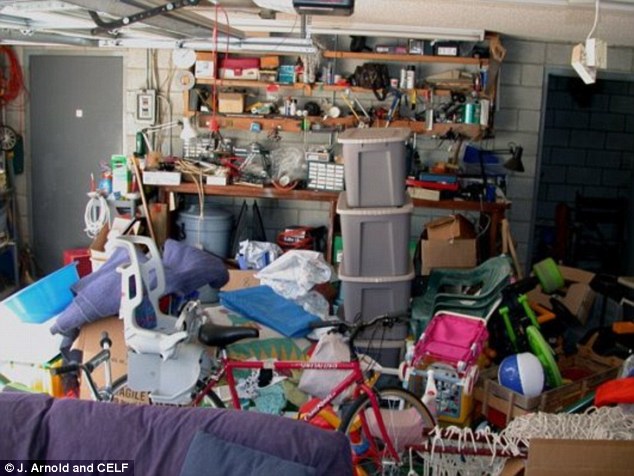
I’ve got too much stuff. The trickle-down effect of my father cleaning out his house is that I am forced to clear out mine. I love getting rid of things almost as much as I like getting new things. My husband thinks I am missing the sentimentality gene, but I disagree. When push comes to shove I am just not that attached to material things.

My father is the anti-pack-rat. Nothing collects dust in his house. If you leave a glass on the counter for more than two minutes it is quickly put into the dishwasher when you’re looking the other way. He is on a mission to rid himself of all things superfluous. I admire this – it’s quite Zen of him. My sister jokes that he will soon just have the clothes on his back and his car key. He makes daily visits to dumpsters and Good Will. I get regular visits when he brings things he thinks might hold sentimental value for me.

He called me to ask about my late mother’s voluminous and meticulous medical files.

“Get rid of them,” I said.

While keeping notes gave my mother a feeling of control over her various ailments, it would just make me sad to look through those piles. Why remember the bad things in detail? I know the basics of her medical history as it might pertain to me or my children. Beyond that, what does it matter?

I keep only scant records of my special needs son’s medical and educational journeys. I don’t want to read back on years of schooling and testing to remind me that his life has been hard. I don’t care to remember the annual school planning meetings, various testing, and assessments. I keep things that make me remember the good times of his life so far, not the mediocre or painful.

We’ve cleaned off the bookshelves – no one wants to read an old book with yellowed pages. We got rid of the crib and the highchair, though my husband objected. Really? Our “baby” is almost eleven. Carpet remnants, old paint, old toys, out of style clothes – gone. Looking through a box of things from my childhood, I found a small bean-bag stuffed animal – a frog – with a missing button eye.

“Do I save something if I have no recollection of why I kept it?” I asked my husband.

“Maybe you can find someone who can help you remember,” he answered, generally erring on the side of caution when it comes to getting rid of things.

I’ll keep it for a little longer in case the memory comes to me or I find someone who can fill in the missing piece, although I’m not sure who that might be. If not, out it goes.

I actually feel lighter when I look around my house after a good purging. I see things that are being used and enhance my life instead of feeling bogged down by remnants of the past.

It’s only stuff. Lighten up.
 

Sisters

sisters

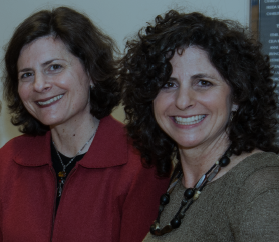
My sister recently came to visit with her kids. She usually stays at my parents’ house, but since my dad has put it on the market, we decided it was best that they stayed with me. My relationship with my sister is something I treasure. She is my friend, my therapist, my superego. We realize how fortunate we are. Not everyone has a sister, or one they like so much. While we have different personalities, we look and sound very much alike. I’m an extrovert, she’s an introvert. I drink Diet Pepsi, she drinks Diet Coke. My hair is curlier. She’s taller. I’m a party girl, she’s a jock.

It’s an odd phenomenon for people to think we’re twins when we are not. I once asked a stranger outside a movie theater if he could recommend a restaurant in the area. He said, “Is your name Judith?” He had gone to high school with my sister, who is four years younger than me and has lived out of state for many years. It’s a little unsettling to freak someone out by your mere appearance. But it’s also kind of cool – it’s our little party trick.

We have a running dialogue, a stream of consciousness free-association, daily conversations with the threads picked up seamlessly, sometimes in mid-sentence. On the rare occasions when our husbands choose to answer the phone, we are called to the phone merely by the word “Sister.”

Having a sister as your bestie has many benefits. We have the same frame of reference from being raised in the same house by the same people. We know all of each other’s friends, who become our friends too. We are the head of each other’s advisory boards. No subject is too big or too small to be discussed – we cover the gamut – marital squabbles, parenting concerns, the merits of the HPV vaccine, SAT versus ACT and how to make chicken schnitzel.

As the older sister I often tackle issues first. By the time my sister was planning her first bar mitzvah celebration. I had already planned two. Here is a typical exchange:

HER: “Assigned seating or open?”

ME:  “Assigned – people need a home base. Wandering around looking for a seat causes even the coolest people to feel like losers. Do your guests a favor and help them avoid social anxiety.”

HER:  “Place-cards?”

ME: “Not necessary – just slap up a list with table numbers and names.”

HER:  “Hospitality Bags – what goes in them?”

ME:  “2 waters, fruit, savory and sweets.”

HER:  “Didn’t Mom say that a certain percentage of the people who rsvp’d won’t actually show up?”

ME:  “Yes, 20 percent. Stuff happens.”

Fortunately, we have similar parenting styles in that we are basically just winging it day by day. Our approach is that we have no official parenting approach. We learned early on that we resort to using the same expletive when pushed to the limit by our children. We figure we must have gotten it from our mother, although she had no recollection of using un-ladylike language.We try to keep in mind one of our father’s go-to parenting slogans, “Don’t get too high with the highs or too low with the lows.”

Neither of us is much into fashion but we are our mother’s daughters so we try to put ourselves together. After our mother died three weeks before my nephew’s bar mitzvah last year I had to return a beautiful suit she had bought for the occasion. Our mother was petite and we are not, so neither of us could wear it. We joked that our mother would have looked better than both of us, which she usually did. We didn’t mind. We felt proud to have such a beautiful, stylish mother even if we sometimes felt like her frumpy daughters.

I often went with my mother to her medical appointments. Once, as we waited to be seen by the doctor, we sat across from each other in the exam room.

“I don’t like that jacket,” my mother said.

“Really? I got it at Target. What don’t you like about it?” I asked, somewhat amused.

“I don’t like the color or the fabric,” she casually explained.

I went home and promptly called my sister with this breaking news.

She said, “You’re getting rid of that jacket, right?”

“Absolutely,” I told her.

Mother was generally right about these things.

Like our mother, we are both practical and like our father, we are direct. We’re comfortable with who we are and generally say what’s on our mind. We enjoy being with other people but equally enjoy being by ourselves. We each lived alone when we were single. We loved the solitude, quiet, and autonomy. When I showed my kids where I used to live before I met their dad one of them asked me who I lived with. I told him I lived alone. He thought that was sad. I relayed this story to my sister.

She, as usual, hit the nail on the head when she deadpanned, “If you call the happiest time of my life sad.”

Life has occasionally tossed me lemons, but not in the sister department.


My Mother’s Hands

dr-sears-mother-hands-and-child-handsSitting in synagogue recently for the High Holidays, I thought of my mother, as I often do. This was the first round of High Holidays that I wasn’t reeling with fresh grief. Jewish holiday services are long – often lasting several hours. As my children sat briefly with me, I was reminded of all the times I sat with my own mother when I was young. Like most children, I found the services to be excruciatingly boring, so I passed the time counting the pages until the service was over or the minutes until I could be excused to roam the building with the other children. I also spent a lot of time looking through my mother’s small purse with its sparse contents for synagogue: kleenex, lipstick, a hard candy or two.

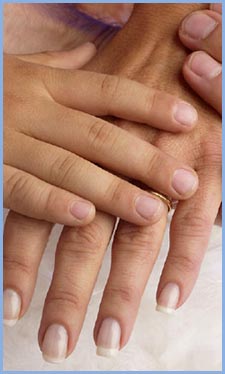
This year as I was sitting in the sanctuary, listening to the service, feeling introspective, I was struck by the memory of my mother’s hands, as I looked down at my own. I remember examining her jewelry and playing with her rings, trying them on to see what it felt like to  wear grown-up jewelry. Her hands and fingers were toys to keep me entertained and quiet. I admired her nail polish. I remember the feel of her skin as well as her sidelong glances, smiles, a warm embrace or her fingers entwined with mine.

I watched my mother’s hands change from those of a young woman into those of an older one with age spots and pronounced veins. They remained well-manicured but suffered from the cold and arthritis. As a grown woman, I continued to sit with my mother whenever possible. I still tried on her rings and was the happy recipient of a squeeze of the hand or a pat on the knee. These memories evoke feelings of security and being loved.

My daughter just discovered the game, Cat’s Cradle. She earnestly studied the book to see how to make various patterns and shapes with the colorful band of string and then asked me to play with her. My hands miraculously remembered just what to do. I was astounded by their memory, as was my daughter.

Now I’m the Mom, with middle-age hands. My daughter looks through my purse, plays with my jewelry and pleads to be released from the service. I hold her hand and try to placate her boredom.

I’m paying it forward, with my hands.


My Own American Werewolf

002800americanwerewolflond

I used to have a darling third child. He was born six weeks premature but quickly exploded into a blonde dumpling – an anomaly in my house of brunettes. He was an adorable child – fun, funny with a delightful disposition. He was a pleaser and very affectionate, so much so that my husband and I nicknamed him “The Drape” because he would hang on us at any opportunity. A touch smothering but basically adorable.

Now he’s thirteen. His mood generally morose, he is most often found with his head attached to headphones and watching television shows on the computer screen. I have to remind him to do the things he’s supposed to do –  homework, shower, eating, etc. In all of our interactions he’s either snippy, spacey, or both.

“Huh?” seems to be his bewildered response to every inquiry.

I know this is the norm for an adolescent. What sets this child apart in our household is the rapid transformation from adored child to exasperating teenager.

It is my experience that when a child irks one parent, the other parent is able to swoop in and valiantly play defense attorney for the young offender – the champion of the poor, misunderstood child. I think that’s part of evolution, so we don’t kill our young.

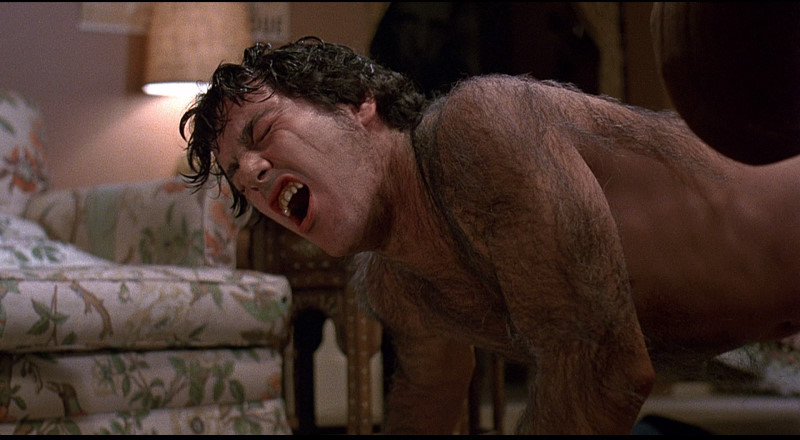
For me, adolescence can be summed up by the 1980’s movie, An American Werewolf in London, where the main character, an adorably boyish looking twenty-something, periodically morphs into a terrifying werewolf. Our children, once so pure and pristine suddenly begin “the change” into adulthood. Their faces temporarily appear out of proportion, they get acne, their limbs are gangly, their hormones surge, until they become a creature that we hardly recognize. Oh, how I long for my cute little boy.

I am fairly confident that he will come out okay on the other side of adolescence, if I don’t kill him first. I see little glimmers of hope from time to time – watching him laughing with friends or playing charmingly with little kids. Deep down the sweet little boy is still there. Even werewolves must love their mothers, right?

It is clear to me now that my experience of adolescence as a parent to three boys has all been one giant preview to the main event that awaits me in the near future. My daughter turns eleven next month.

Pray for me.

Just Say Yes

volunteering

Volunteers. Selfless, noble, doers of good. God bless them. That being said, I must confess that my knee-jerk reaction is to say “no” when asked to take on a volunteer job. I’m busy and don’t particularly want to put more on my plate. As I’ve gotten older, however, I’ve learned how the volunteer thing works – it’s about people and relationships that get things done. So I have had to re-train myself to think and act differently when considering volunteering. Philanthropy is defined as the practice of giving money and time to help make life better for other people. I can wrap my mind around that. I think we all can.

We cannot, however, all be uber-volunteers who say yes to just about everything. Those people are reliable, responsible, and ultra-competent. Frankly their efficiency is a little scary. Thank God these people exist. We can’t all be uber-volunteers. I certainly am not. Those people are a different breed, another level of other-directedness. I am more of the occasional volunteer and I’m comfortable with that.

While it’s worthwhile to get children involved in doing good deeds, I think there is even greater value in parents modeling volunteer behavior for them. Children watch and learn from how their parents conduct themselves. I heard someone speak once about the power of memory and how we remember our parents’ volunteer activities from when we were children. Were your parents always complaining about having to participate or were they proud of it? Your memories of your parents may guide how you view volunteering. My husband and I are very careful to put a positive spin on our volunteer activities so our children see it as a worthwhile and valuable contribution, one they will remember when they grow up and their time comes.

You can pick and choose what you volunteer to do – just do something. Unless you live under a rock, you are part of a community. My goal is to give back a little more than I take. Do I always achieve this? No. Sometimes I fall short. Socializing comes easily to me so I host and attend functions where I can serve as an ambassador for whatever organization I feel strongly about…drinking wine and chatting are in my skill set. Sometimes it’s important to go to dinners and events to support friends and acquaintances and the charities that are important to them, even if you “don’t wanna.”

Asking for money is a dreaded task for 99% of people, up there with public speaking. I hate it too. It feels intrusive and overly personal. But someone’s got to do it. I am not talking about paid, aggressive solicitors from random organizations. I mean people from within your community, from the organizations you’re associated with. They don’t ask for money to put into their own pocket for say, a home kitchen renovation. It’s for worthy causes. I try to remember that and cut the person some slack when they call me.

When I was recently asked to help with a fundraising effort, I was busy and distracted and desperately wanted to say “no.”

Instead, what I said was, “I’m not going to say yes, but I’m not going to say no. Let me think about it.”

I ended up saying yes. Next time you get the call to volunteer, consider answering it.


The Secret to a Good Marriage

old-couple-411758

We have all read the standard advice about how to have a good marriage. Strong communication, scheduling date nights, and not going to bed mad are some of the most frequently cited. I agree that these are excellent ideas. However, I have recently discovered what can be described as the purest display of love and devotion, an act that says, “I really care about you.” This pearl of wisdom, this key to marital harmony – leaving a spare toilet paper roll on the back of the toilet when the current one is perilously low. It’s really that simple.

I don’t know when this paying the roll forward started in my house. We didn’t discuss it. We just quietly started doing it. Nineteen years into our marriage and we’ve figured it out. A small act of kindness goes a long way. We’ve all experienced being stranded without a roll. It’s a horrible feeling of helplessness and extreme vulnerability. That spare roll is saying, hey, I’ve got your back – both literally and figuratively.

I was discussing our acts of bathroom kindness with my sister.

She said, “Yes, that is what that Love Languages theory is all about. You feel loved by acts of kindness. So do I. It must be in the genes.”

Gary Chapman, a marriage counselor, came up with this theory. He says each person has a primary love language that we must learn to speak if we want that person to feel loved. They are: words of affirmation, acts of service, receiving gifts, quality time, and physical touch. My sister proceeded to tell me that her husband has been doing the dishes lately, a task that she usually took care of. When she asked him why he was so eager to do the dishes, he told her that he knows it makes her happy when he does things around the house without being asked. Flowers and perfume aren’t her thing. Hence, he shows her his love by doing the dishes. What an interesting concept.

So many people routinely test their spouse to see if they remember the right occasions, buy the right gift, say the right things. This is a set-up for failure and disappointment all around. Everyone wants to be a good spouse. Maybe it’s as simple as stating what makes you happy, and meaning it. No hidden agenda or test.

I read an article by Sally Quinn several years ago that stuck with me. She was talking about seating at dinner parties. She suggests that you seat partners apart from each other. It allows each spouse to have a conversation with someone else, to learn something new, which makes for interesting conversation on the ride home. More importantly, it allows you to watch your spouse across a room, engaged in conversation with other people. Perhaps it reminds you why you liked him/her in the first place. We get caught up and focused on the things that irritate us about our spouse. We forget to look at our partner as we first knew them – adorable, witty, funny, personable. Or whatever traits drew you to the person in the first place.

Years of marriage build a bond that can’t always be seen. A look passed between you can speak volumes. You can read each other’s minds.

It’s the small gestures that help build big relationships. One roll at a time.

Bittersweet Sixteen

sweet-16-birthday-cakes-pictures

My son with special needs turned sixteen last week. My father reminded me to say a prayer, expressing gratitude for having raised him to this point in time. I am thankful that he is happy, loved, that he walks and talks.

It is, however, bittersweet. Oddly enough, I am most sad that he is not on his way to driving a car – the highlight of turning sixteen for most teenagers in the United States. The ability to leave the house and your family and find your own way is liberating.  I still love to hop in my car and drive away sometimes. Except this time I’m running away from my children. Sweet separation. My eldest son is seventeen and he drives. His little sister once asked where her brother, the new driver, was.

“Out,” I answered.

“Why?” she asked.

“Because he can,” I told her.

I vividly recall my elation at getting my license and the incredible freedom I felt. I remember going “out” as often as I could, to that elusive place where parents can’t find you. Nowadays children can’t be as unavailable as they’d probably like, poor things, because of the homing devices that are their cell phones.

It makes me sad that my second son cannot go “out,” although he doesn’t seem to want to. He is not focused at all on the fact that he is not on the driving trajectory. In fact, he would probably be happy to stay “in” for the rest of his life. He’s happy surrounded by his family and his beloved video games. It’s tempting to let him stay in forever, to keep him safe and sound.

“Maybe he could try taking the driver’s ed course, to see if he could even pass?” I mused to my husband and other children.

They all dismissed the idea as ludicrous. He would be a danger to himself and others, they argued. His lack of attention to the world around him could have disastrous consequences. Are we selling him short? Am I crazy and deluded? Maybe a little.

It’s part of the ongoing see-saw of raising a differently-abled child. I am grateful for the things he is able to do but the grief for what he can’t do lurks in the background. His brothers are tall, strapping young men like their father. I encourage this son to consume as many calories as he can, so that maybe he can be as tall as his five-foot-four-inch mother. I cling to things I may have a touch of control over, to maintain an illusion of normalcy.

There is a popular essay which is given to many parents when they have a disabled child. It is called “Welcome to Holland.” The gist of it is that you were planning a trip to Italy and were shocked to find you arrived in Holland. Once getting over your disappointment at landing at the wrong destination, you look around and discover the beautiful things in Holland. It’s a lovely metaphor to try to make you feel better about the immense sadness and disappointment you feel when you have a less-than-perfect child.

It works for a while, perhaps getting you through the early years of crushing hardship and disbelief. I have a group of women friends who I met in a support group ten years ago, all who have disabled children. My “Special Mom” friends, I call them.

“Holland sucks,” we wholeheartedly agree.

But here we are. We strive to savor the sweet and tolerate the bittersweet.

So Happy Birthday to my young man. Who cares that driving’s not in your future? I’ll teach you how to ride the bus.


The Closet of Many Sizes

clothescropped

The Jewish holidays are upon us once again. How to make them meaningful? Who to invite over?  What will my menu be? And the most difficult question…what will I wear? Not in the fashion sense-who’s looking at me way. But in the what- will-fit or what-size-am-I-this-year way?

Thank goodness for the closet of many sizes.

My weight, like many people, fluctuates. Some may view me as chubby, others might see me as thin-ish. What really matters is how I see myself. I can accept growing older and my changing body. I can try to hide the lumps and bumps that come with my life experiences. Four c-sections and nursing babies came with a price to my body. But I don’t need to give in to food and give up on keeping my weight at a place that’s comfortable for me.

Sure it’s difficult.  I love food. The challenge is finding the balance of enjoying food but not letting it get the better of me. How can I drop that extra 10 pounds? Here it is – the secret to losing weight…eat less and get off your tush. Simple? Yes. Easy? Not so much.

The dieting world is a multi-billion dollar industry for a reason – people want to look good and be healthy.  My favorite weight loss program was Weight Watchers, which helped me get a handle on my weight a few years ago. But then I got lax and whoop, there it is – the weight creeps back up. We all have heard the reasons why people overeat – because we’re happy or sad or lonely or bored. We eat because we’re hungry or because food’s delicious – whatevs. No matter the reasons, we’re alive therefore we eat.

I learned about healthy eating from my mother. She was so darn healthy, it was annoying at times.  She was very aware of what she ate but not in an eating-disorder kind of way. She always kept her weight in check, generally looking better than I did. She truly could have a bite of something delicious, or just one cookie – that is not in my genetic code.  I admired her healthy eating and emulated her as much as I could, but unfortunately I am more of a textbook glutton.

I hate my closet of many sizes, yet love it all the same. The jeans from when I was my skinniest hide in the corner, mocking me and daring me to ever fit into them again. Then there are my “fat jeans,” my reliable, comfortable old friends – I hate fitting into them but am grateful they are there to welcome the larger me . I can’t bear to shop for a bigger size.

I will mentally set my brain to “lock-down,” and try to control my excess eating and exercise more. My food strategy can be compared to the mullet – business during the week and a party on the weekend. It takes some will-power and determination. And a touch of vanity. I make no grand proclamations and take it a day at a time.

Starting tomorrow of course, after a last supper of Peppermint Patties and Chardonnay.


Goodbye House

043

My father is selling his house of 37 years.  The house he built with my mother that reflects their vision, design, and love. My mother’s been dead for almost a year. My father followed the advice he gave to others, as an attorney, and did not make any big changes for a year.

Compared to losing a loved one, all other changes seem superfluous. People ask me how I feel about my father selling the family home. I feel oddly detached about it.  Losing my mother was hard. Saying goodbye to a house feels easy by comparison.

It is a beautiful, unique, light-filled contemporary home. My father was always so tickled when people he met mentioned that they’ve been in our house and how nice it was. True confession time, Dad. Whenever you and mom left town and had the poor judgment to leave us home unattended, I had scores of raging parties there as a teenager and young adult. It was all part of the joy of that wonderful house. Ah, good times.

Then I grew up and appreciated the house as a home. I brought my husband to meet my parents there, celebrated many occasions together with my own children and their grandparents, gathered for holidays, and nestled in for quiet times. I went there to tell my parents I had breast cancer. My mother died in that house.

Somehow the house lost its soul when my mother left this earth. My Dad keeps up the house beautifully, but as he says himself – it’s just not the same. The house is no longer the center of the family without my mother there. It’s just a house. I’m grateful that he’s able to get it ready for sale on his own. My mother, in her infinite wisdom, had been thoughtfully distributing her things for years to her children and grandchildren so there is not an overwhelming amount of “stuff” for my father to sift through. In fact, the social worker in me thinks it’s a lovely way for him to do “life review” as he goes through the memorabilia of his 54-year married life with my mother.

It will be strange to visit my father in another home. My sister and her family will have to stay with me when they come to town to visit, which is a bonus for us. It will be very strange for her, I’m certain, to lose her home-base.

So yes, I’m okay with the selling of the house. My grief is settling into a place where I can be less sentimental and more practical. Keeping that house won’t bring my mother back. As long as my father’s ready for the next chapter, I too can move on.

Like the saying goes, home is really in the heart anyway.


Sultry Housewife

sultry housewife

Lauren Bacall died recently. The NY Times banner that came over my phone read – Lauren Bacall, Sultry Movie Star dies at 89.

Sultry, I thought, what an awesome word. Then I thought, what are the chances that I would be remembered as “sultry?” Sultry housewife? Sultry blogger? Unlikely. A girl can dream though.  If I’m not sultry, how will I be remembered? And no, nothing is wrong with my health. I’m just speculating, something a blog allows me to do.

Funny? I’d like that. Authentic? Yes. Earnest? Definitely not. Kind? Most of the time. Smart? About some things. Outgoing? Most certainly. I never married a Humphrey Bogart-ish celebrity but I did marry Brad Stillman – a legend in his own right. Yes, he proofread this and allowed it to stand as is. He too has a sense of humor and is very humble about his greatness. He thinks I would definitely be remembered for having excellent taste in men.

People don’t use the word sultry often. I think it’s a great word. It’s sexy, but in a classy way. It also makes me think of another word not frequently used – slatternly. Sultry means “attractive in a way that suggests or causes feelings of sexual desire.” Slatternly, on the other hand means “untidy and dirty through habitual neglect” or “of, relating to, or characteristic of a slut or prostitute.” The line between sultry and slatternly…where is that line? I just hope I end up on the right side of it.

Don’t worry, I’m not in danger of sliding to the dark side.  Been there, done that, in my younger days. No, like Lauren Bacall, I’m deep down just a nice Jewish girl.  While “sultry” may be the word most associated with Lauren Bacall, her friend Sally Quinn also described her as “funny, razor sharp, mischievous, iconoclastic, self-deprecating and openly vulnerable. She shared her life with her friends and radiated a feeling of trust that was always returned.” Wow, she sounds like the kind of person I would like to hang out with.

Does sultry housewife have to be an oxymoron? Must these words be mutually exclusive? I don’t think so. I recently heard a lecture on relationships. The speaker talked about how women (and men) put their best self forward whenever they go “out.”  Out to work and out with friends. Yet often we wear our least attractive, most comfortable clothes when we are in our homes.  What a novel idea – to look as nice in the house as you do when you go out?  Put your best self forward for your spouse or partner. Not in a June Cleaver, pearls and formal dress kind of way, but in a way that says I’m in this relationship and care about nurturing it and keeping it fresh. I can get with that notion.

Don’t get me wrong – I’ll hang on to my sweatpants. I’m not crazy. But I will wear them sparingly.  Just like Lauren Bacall probably did.